Skip to content

Freedom Road

A poem by Simon Armitage

If we want to walk along Freedom Road
then away we go.  It’s a slog at times
but look at the views: deserts, the airport, a lake.

On the move, passing through towns and cities
we dance with the locals.  Come as you are,
they say, do as you wish, sing us your dreams.

Or if we decide to stay put, Freedom Road
is our home address.  A neighbour’s washing
flaps in the breeze like hilarious friendly flags;

in the house and over the garden fence we agree
to differ; someone’s grazing a horse on the common
where Freedom Lane becomes Freedom Green.

You can’t dig up freedom like a potato
from the verges of Freedom Way, or pan it
from Freedom Beck like inklings of gold;

it won’t be delivered to Freedom Avenue
gift-wrapped in silver string.  Where it goes unnoticed –
that’s where it exists.  Listen, when people ask

where they can find Freedom Road, we don’t say
turn right by the church, left by the bank,
we stroll where we want and live as we please.

And there it is.
See What's On:

Alnwick Playhouse

In a community-led, multi-artform project, Alnwick Playhouse will invite the people of Alnwick and district to consider what freedom means to us now, and if and how that has changed in the 80 years since the end of the Second World War, with the aim of creating a takeover weekend at the Playhouse later this year.  Local volunteers, the Playhouse band, Youth Theatre, Alnwick community groups, the Duchess High School, and more will be supported by Playhouse staff and the artists engaged with the community to deliver this event.

Bondgate Without
Alnwick
Northumberland
NE66 1PQ
View more on the venue's website

An Tobar and Mull Theatre

An Tobar and Mull Theatre’s community-led project will invite local people to remember and reflect on VE Day, Tobermory’s history as a naval base during WWII, and what freedom has meant across generations on Mull. Involving older residents and wartime descendants; young people and schools; local businesses and shop owners along Tobermory Main Street (as hosts for window and in-store installations); and community groups and clubs, the island’s living history and heritage will be captured and brought to life through a creative trail following a route unique to Tobermory, from Main Street through to the Lighthouse path, using physical landmarks to anchor the narrative.

Druimfin
Tobermory
Isle of Mull
PA75 6QB
View more on the venue's website

ARC

Our Freedom: Stockton Rising was a powerful live event reflecting on what freedom means to the people of Stockton, 80 years after the end of the Second World War.

Taking place on Remembrance Day, the event brought together original work co-created by local participants from ARC’s regular creative engagement classes, refugees and asylum seekers who now call Stockton home, ARC’s award-winning associate company of learning-disabled theatre makers, Full Circle, and members of Tees Valley New Creatives.

The production wove together each group’s creative response to Freedom Road, a specially commissioned poem by Poet Laureate Simon Armitage. Each moment offered a window into personal, imaginative and hope-filled answers to the question: what does freedom mean to you, here and now?

The evening opened with a special performance from acclaimed 1940s singer Samantha Holden, whose rendition of The White Cliffs of Dover set the tone and instantly engaged the audience.

ARC hosted six workshops led by associate artist Umar Butt, who worked with a group of local refugees and asylum seekers to co-create a moving piece of theatre exploring their experiences of freedom. The performance traced their journeys to Stockton and reflected on what the town now represents in their lives.

A bespoke piece of poetry was written and performed by poet Aisha Lama. Delivered from the theatre balcony, the poem explored what freedom means to her:

We’ve tasted freedom
At the silence of guns
And the talks of treaties

And I like everyone
come from some shard
of freedom
From the right to travel
The right to settle
The right to citizenship

But freedom does not come
Easy nor instantly  And I don’t think we will know
what real freedom is
Until each of us on this earth
is well and truly free

Six members of Tees Valley New Creatives, a project supporting recently graduated creatives, devised and performed a piece of theatre exploring what freedom means to the local community. This work was created through conversations with members of community groups and members of the public visiting ARC.

They also delivered a dramatised reading of a letter submitted by a community member: a father writing to his son about the day he returned from war. This deeply heartfelt moment resonated strongly with the audience.

ARC’s regular ARCulele class came together to perform a series of songs reflecting on freedom, including I Can See Clearly Now and It’s a Long Way to Tipperary.

To close the show, Full Circle shared a film capturing what freedom means to each individual member of their company. The film explored what needs to be in place for disabled people to feel free, from trips to theme parks to dancing in nightclubs, and much more, offering a joyful and honest celebration of autonomy and possibility.

Together, Our Freedom: Stockton Rising honoured the past while amplifying the voices shaping Stockton’s present and future.


Dovecot Street
Stockton on Tees
Cleveland
TS18 1LL
View more on the venue's website

ARK

ARK, Cliftonville’s Cultural Space – a former synagogue with a unique heritage and based in a unique part of Thanet with diverse communities – will invite people to contribute to and take part in The Freedom Space project through building planters, planting (with herbs for the community to use), and creating mosaics and ceramic pieces.

Through its active volunteer programme; free activities for the local Roma community and refugee and migrant communities, weekly drop-ins and programme of workshops for local schools celebrating Jewish heritage; members from the local mosque; and the wider local community, this project will celebrate the diversity of the community, and ARK as an inclusive, creative cultural resource, and will also provide an opportunity for people to continue to be connected to ARK, and each other, while the building is closed for improvements over the summer.

Cliftonville Cultural Space
Albion Road
Margate
Kent
CT9 2HP
View more on the venue's website

Arts at Old Fire Station

Am I Free Yet?

What is freedom? A dream, an illusion, a shifting state of mind? Does yours come at the cost of mine? Will we ever truly be free?

Am I Free Yet? was a theatre production and photography exhibition created by the Hidden Spire Collective, a participatory art group based at the Old Fire Station. The collective brings people together from different walks of life; many have lived experience of homelessness and first came to the Old Fire Station through Crisis, many grew up outside of the UK, and many have lived in Oxford all their lives. Developing ideas and deciding on a creative focus

The Our Freedom project began in June, meeting weekly for creative workshops and discussion sessions. With the support of four visiting Oxford academics specialising in history, health, and social sciences, the group explored what life would have been like in 1945 in relation to these themes, and how they experience them today. These conversations sparked a rich collection of poetry and imagery, which inspired a performance bringing all their ideas together. Co‑creation sat at the heart of the project. The group determined what they wanted to say about freedom and how they wished to express it. They chose to create a theatre performance and, working with facilitator Lizzy McBain, developed an open call for an artist. The group were involved in shortlisting and interviewing applicants, and selected theatre maker Polly Tisdall as lead artist.

Co-creating a performance

Over eight weekly sessions, the group danced, dressed up, devised characters, shared favourite freedom songs, and sang together. In the first phase, they listened to Simon Armitage’s poem Freedom Road and had lots of strong opinions about whether it represented their ideas of freedom. They wanted to create a performance responding to the poem and exploring the promises made to people at the end of the Second World War, and what has happened to those promises since.

They envisioned a show that took audiences on a journey through different recognisable scenes from communities over the last 70 years: a community party, a garden, a GP surgery, a park bench. One discussion centred on what Freedom Road would look like, if it existed, and if it would be a road at all. Perhaps it would be more like a maze? Experimenting with how to represent this physically on stage, the group discovered their ‘grid’ – a series of lines along which we can journey, seeking freedom, but which itself keeps us contained. . Some characters are journeying physically on this grid – from one geographical place to another, while others are journeying within their own minds. And some characters have more power on the grid than others.

After four weeks of devising, the group’s improvisations, characters, and writing were brought together into a script, which the group then responded to and refined.

Building an exhibition

Photographer Sam Ivin created portraits of each cast member in character. Alongside these images, the group wrote or drew from their character’s perspective about what freedom meant to them. The exhibition will be displayed in the Old Fire Station gallery from March to October 2026.

“My poems are me putting my feelings and opinions into words. I didn’t expect people to understand because when does the topic of freedom ever come up? No one sits around the table and says ‘Oh, let’s discuss freedom.’ I wrote how freedom is a bubble you can pop anytime. We’re so conditioned to be part of the system. I didn’t say it directly but I tried to show it in the way the poem was structured. I expected it to pass people by. I was really surprised at the interest in it.”

“On the day of the performance, just before it started, I was behind the curtains and I wanted to see the audience. I had a look and my heart started pounding. I wasn’t expecting the whole place to be so full. I felt very nervous but luckily Jodie was by my side and said ‘We can do it. Don’t worry. It’s my first time too.’ After the performance was over, I went to the washroom and audience members said things like ‘Oh, you were so good.’ I gave my maximum effort but I was still surprised at the compliments. The following week, the project was reviewed and I was asked for my thoughts. I said ‘It’s perfect, it’s brilliant and there’s nothing I would’ve changed along the way.’ I asked ‘When are we going to start the next one?’ I’m feeling good and I’m ready for more. I’m the project’s number one advocate. There’s something so beautiful over here, everyone should experience it.”


Old Fire Station
40 George Street
Oxford
OX1 2AQ
View more on the venue's website

Arts Centre Washington

Arts Centre Washington – Unbound: Our Freedom

Unbound: Our Freedom Cabaret was a bold and evocative exploration of what freedom meant to different people—personally, politically, emotionally, and collectively. Presented at Arts Centre Washington, the project brought together storytelling, music, theatre, film, soundscape and visual art in an unforgettable evening that many audience members described as “absolutely fantastic… really engaging and funny… a pleasure to watch.” The event invited people to reflect on the fragile, powerful and deeply human nature of freedom, and left a lasting impression on those who experienced it.Created by intergenerational community groups working alongside theatre‑maker Liv Hunt, the multimedia performance united participants from Washington Youth Theatre, Washington Young Film Makers, Right Track Young Musicians, Creative Age and Washington Community Podcasters. Through original scenes, live music, recorded oral histories and projected visuals, the performance wove together real stories from Washington and Sunderland with imagined futures shaped by young artists. Audiences praised the young performers as “inspirational” and celebrated the way the work “brought to light some very important issues.”

Developed in collaboration with local artists and heritage partners, the project was rooted in lived experience. Drawing upon archival materials, personal memories and diverse contemporary viewpoints, the production offered a vibrant and emotionally resonant journey into how individuals and communities had understood and experienced freedom, both historically and in the present day. Many viewers highlighted the emotional impact of this approach, calling the show “explosive… thought‑provoking… absolutely brilliant production.”

At the heart of the performance was a central provocation: What was freedom – and who had the right to experience it? This question shaped the work across its many scenes, from lively cabaret moments to unsettling dystopian theatre pieces. The opening script set the tone with humour and self‑awareness:

Emcee 2: “We are introducing a Cabaret inspired by the poem Freedom Road. We are putting freedom under the microscope and asking: What does freedom mean today? And what will it look like in the future?”

Emcee 1: “We have music! We have drama! We have soundscape and film!”

Emcee 2: “We have free Roblox gift cards!”

Emcee 1: “No we don’t – don’t say that!”

From there, the work deepened. Youth Theatre pieces confronted themes such as surveillance, coercion, identity, political control, and personal agency. Right Track musicians performed original pieces exploring freedom of movement, expression and thought. A moving epilogue reinforced the idea that freedom is rarely defined by one grand moment – it often begins with small acts of courage, resistance, or self‑belief. Audience members responded strongly to this blend of humour and depth, noting how the “thoughts and brilliant performances of young people” were complemented by the surrounding gallery exhibition.

Watch Liv Hunt speaking ahead of the Cabaret

Watch the final Cabaret performance

Spotlight: Washington Open Exhibition 2025 (Friday 14 November – Saturday 20 December 2025)

Running alongside the cabaret, the Washington Open Exhibition 2025 placed a spotlight on the creativity of artists living and working in the region. An open call invited artists to respond to the theme of Freedom, directly inspired by the Our Freedom project.

Artists were encouraged to reflect on key questions:

  • How had freedom shaped the community?
  • What happened when freedom was taken away?
  • How did we understand freedom today—and what might it mean in the future?

The selected artworks showcased a powerful range of responses. From painting and sculpture to textiles, photography and digital media, each piece offered a distinct perspective – whether personal, political, social, or creatively interpretative. Together, the exhibition and the cabaret created a rich dialogue about agency, belonging, identity, and the inequalities that shaped lives across generations.

Unbound: Our Freedom Podcast

The project also expanded into audio storytelling through the creation of the Unbound: Our Freedom Podcast. Members of The Crocodile Collective went out into the Washington community to speak with people about what freedom meant to them. It was not an easy question for many – especially when asked without warning – yet after a moment’s thought, participants of all ages shared insightful, surprising, and often deeply personal reflections. The resulting podcast captured these voices, offering a mosaic of perspectives from young people, older residents, and everyone in between. It became an audio time capsule of Washington’s thoughts on freedom: its meaning, its absence, its complexity, and its importance. The podcast is set to be released across major platforms and YouTube, enabling the wider community to listen, reflect and contribute to the ongoing conversation around freedom.

Legacy

Our Freedom at Arts Centre Washington became more than a performance. It was a conversation, a provocation, and a celebration of community voices. Through humour, honesty, creative risk‑taking and collaboration, the project invited audiences to consider what freedom meant to them – and what they were willing to do to protect it.


Biddick Lane
Fatfield
Washington
Tyne and Wear
NE38 8AB
View more on the venue's website

artsdepot

Shaped by the people of Burnt Oak, home to a rich tapestry of communities, including a strong Nepalese presence rooted in the ex-Gurkha community, as well as long-standing Jewish and Irish populations, and more recently, Romanian communities, artsdepot in London will collaborate on a series of a series of inclusive and participatory workshops which will enable local voices to share their perspectives on what freedom means to them.

Creating space for diverse voices and perspectives to be heard and valued, these creative workshops will culminate in a community-led installation or public artwork which will be showcased both in the local area and at artsdepot, with the aim of sparking conversation, reflection, and celebration around the theme of freedom.

5 Nether Street
Tally Ho Corner
North Finchley
London
N12 0GA
View more on the venue's website

Awen Cultural Trust – Maesteg Town Hall

Voices of Freedom, a multi-sensory immersive exhibition in Maesteg Town Hall, was a space to reflect and remember the sacrifices of our Armed Forces, past and present. Many visitors described it as “peaceful and beautiful” and “deeply moving”, with several noting how it brought back personal memories of loved ones who had served.

Ahead of the exhibition, the project’s associated artist, craftivist Nazeem Syed, led six creative lantern-making workshops across the Awen libraries in Bridgend County. Local people decorated the lanterns and left messages on them, reflecting on what freedom meant to them, as well as to honour the sacrifices of the Armed Forces. For many who took part, seeing their lanterns later displayed in such a calm and meaningful space felt “beautiful, thoughtful and reflective”, adding a personal connection to the final installation.

These lanterns were then taken to Maesteg Town Hall where they formed part of the immersive exhibition, created with project partner 4Pi Productions. The exhibition included several multi-media elements:

  • Room of Reflection: A candle-lit mirrored room where visitors listened to a recording of the poem Freedom Road by Poet Laureate Simon Armitage, amongst the decorated lanterns. Visitors often described this room as “thoughtprovoking, calming and imaginative”, with some saying they were “immediately involved in the spirit of the exhibition”.
  • Veterans’ Voices: Videos of local veterans sharing stories of their experiences and thoughts on freedom, which visitors heard through individual headsets. Many found these testimonies moving, praising the empathy and care shown in their presentation.
  • Fields of Poppies: Augmented reality was used to digitally project a field of red poppies, which moved as visitors walked across the installation. This interactive element resonated strongly with both adults and children, who loved the opportunity to engage physically with the space.
  • Wishing Well: A well created with books, with moving images of veterans from across South Wales at the bottom.
  • The Welsh at Mametz Wood: A large digital projection of the painting by Maesteg-born and renowned Welsh artist Christopher Williams, portraying the 11 July 1916 ‘Charge of the Welsh Division at Mametz Wood’. Audio shared Williams’ own experiences as he made his way to Mametz Wood, taken from his 1916 letters. Several visitors commented on how powerful and poignant this element felt within the wider exhibition.

Project photographer Abbie Poulson took photos of the exhibition and created artwork on the first day of the installation.

Voices of Freedom was open to the public from Saturday 8 November until Tuesday 11 November. On the morning of Remembrance Day, a ‘relaxed opening’ was held, with reduced visitor numbers and audio, followed by visitors and staff observing two minutes’ silence at 11am. Some described being present for the silence as making a wonderful experience “even more poignant”.

On Monday 10 November, local Llynfi Valley primary schools brought pupils to see the exhibition, hosted by Awen Heritage and Libraries staff. Pupils learned about Remembrance Day and enjoyed the exhibition in smaller groups. Especially pleasing was that the interactive poppies made as much of an impact on the children as the Room of Reflection and the Mametz Wood painting.

Across the open days, visitors repeatedly praised the exhibition’s creativity, emotional depth and thoughtful use of the Town Hall space. Many described it as “a wonderful and moving experience”, one that would stay with them, and a powerful reminder of those “who gave up their freedom so we could have ours”.

Voices of Freedom

Stable Offices
Bryngarw House
Brynmenyn
CF32 8UU
View more on the venue's website

Barnsley Civic

A photograph of the exterior of Barnsley Civic. It's a four-storey Victorian brick building, with a modern glass-front on the ground floor. People are standing on the street watching two performers on stilts.

Centred on the idea of ‘Freedom from Want’ and exploring community solidarity and collective action in Barnsley from the 1940s to the present day, Barnsley Civic will focus on food, then and now, linking war-time rationing, growing-your-own, and food waste reduction, to modern-day food banks and community pantries.Local organisations and individuals will come together to share their stories, views and experiences to explore what ‘Freedom from Want’ means to them. From communities specifically associated with food and welfare such as Good Food Pantries, FareShare and Barnsley Food Bank, to groups and partners such as Barnsley U3A, Barnsley Archives, local history groups, schools, the Youth Council, and Young Civilians, participants will be invited to work with local artists and creatives to create a visual response to the prompt ‘What can you bring to the table?’ which will help shape a community celebration in Mandela Gardens in September, and encourage community solidarity, building new networks, relationships and common bonds.

Hanson Street
Barnsley
South Yorkshire
S70 2HZ
View more on the venue's website

Barrow Library (Westmorland and Furness Council)

At the heart of an area that was bombed during air raids in the Barrow Blitz, Barrow Library (helped by co-located services at Cumbria Archives) will be engaging young adults, communities of interest, and specific neighbourhoods to look back at what freedom meant for people living in Barrow during 1945 as the Second World War ended, exploring what powered young people’s hope back then and what powers hope today for them today as changemakers of the future. Participants will work alongside a professional Comic Artist to help realise ideas visually through the medium of comics, developing skills in storytelling, collage, drawing, and creative writing.

Barrow Library
Ramsden Square
Barrow-in-Furness
LA14 1LL
View more on the venue's website

Bracknell Forest Libraries

Freedom has always been central to the story of Bracknell – from its beginnings as a New Town in 1949 to the opportunities it continues to offer today. As part of the Our Freedom: Then and Now project, Bracknell Forest Libraries explored the theme of freedom through the iconic trees of the borough, using them as symbols of shelter, vibrancy, strength, and growth. Just as trees put down roots and flourish, the town was created as a place where people could build community and thrive.

Local artist Areej Abdi created a series of striking Freedom Trees, now on display across all Bracknell Forest’s libraries. Some stand free‑form, others climb walls or wrap around pillars, each with its own distinctive character. Crafted entirely from recycled, donated and repurposed materials – from carpet tubes and newspaper to wood and fallen branches – the trees celebrate creativity, sustainability, and community spirit. Areej spoke often about the joy she found in bringing them to life, describing how the generosity of local donors and the dedication of volunteers shaped every stage of the making process.

The trees were decorated by local people, who created leaves featuring pictures and words expressing what freedom meant to them. Leaf‑making workshops in the libraries invited participants of all ages to explore their own ideas of freedom, and additional groups – including young carers at South Hill Park, Scout groups, residential homes, and local schools – added their voices. Areej reflected on how meaningful these moments of connection were: listening to people’s stories, watching them create with care, and seeing each person find their own way to express freedom. She described the project as a shared artwork that “grew” through every leaf added, filling her with pride, hope and deep fulfilment as the trees took their place in the libraries.

The Freedom Trees will continue to evolve, refreshed with seasonal decorations created during library activities – from Easter themes to magical, story‑inspired designs – ensuring they remain a living, growing part of the community for years to come.

With trees so often linked to magical stories, the libraries were thrilled to invite children’s author Catherine Emmett to write The Freedom Tree of Bracknell Forest fairy tale. Extracts from the fairy tale:

  • ‘All around, thick green vines thrust from the ground! They reared to the sky and tore down the castle’s dark walls! It tumbled to rubble as the vines gently lifted the sprites to safety. The spites laughed and cried to be reunited. They danced and they sang…’
  • ‘Together they planted the little wooden heart that her father had given her, and when the sprites danced around it, it grew to be the tallest and mightiest tree in the forest…’
  • ‘They called it the Freedom Tree. As the years past, the forest flourished and the little hamlet of Braccan Heal grew to become known as Bracknell Forest. The folk there were always known for their kindness and for how they offered a warm welcome to those fleeing trouble in their own lands. To remember the importance of being free, each generation would plant their very own Freedom Tree.’

The story was brought to life during the project’s celebration day at Bracknell Library, accompanied by original music composed by a talented member of the library staff. The event brought together people of all ages and backgrounds to celebrate everything that makes Bracknell Forest such a special and welcoming place. Several of the Freedom Trees were unveiled for the first time, the Mayor of the Borough of Bracknell Forest joined the celebrations, and the day concluded with a shared slice of celebratory cake.

Plans are in place for the fairy‑tale performance to tour the libraries later in 2026, bringing the story to even more families across the borough. A filmed version will also ensure the story can be enjoyed long after the live events, and printed editions – featuring artwork created in collaboration with local young people – will remain available in the libraries as a lasting celebration of creativity and community partnership.

Another key legacy of the project was the creation of a new self‑guided history walk leaflet along Bracknell High Street. Available in libraries and online, the walk invites residents and visitors to explore how the town centre has evolved since the end of the Second World War and Bracknell’s designation as a New Town in 1949. Produced with the valued support of The Bracknell Forest Society, it offers an engaging introduction to the town’s past for newcomers and long‑standing residents alike.


2 Town Square,
Bracknell
RG12 1BH
View more on the venue's website

Brent Council - Libraries at Harlesden and Wembley

The Jason Roberts Foundation (JRF) supported the delivery of four community events in collaboration with Brent Libraries, Culture and Heritage as part of the Our Freedom: Then and Now project. These events were made possible through collaborative community funding following a UK Government grant awarded via Arts Council England. JRF’s role centred on community engagement, coordination and ensuring that activities were accessible to a wide range of residents, particularly young people and families.

The programme included events at Harlesden Library featuring former professional footballers Richard Langley and Mark Stein, who shared personal reflections on their careers, identity and life after sport. Their stories of resilience and opportunity strongly resonated with young people and families, helping to connect sport, culture and lived experience in a way that encouraged aspiration and meaningful dialogue.

Additional sessions were delivered by Connie Henry MBE and Yamilé Aldama, both respected athletes and advocates for youth development. A standout moment was the interactive Your Move event, where Yamilé spoke about her childhood in Cuba and her love of chess, showing how strategic thinking, discipline and creativity shaped her journey. This session effectively bridged culture, heritage and personal development, engaging participants in conversations about freedom, choice and opportunity across generations.

Alongside these events, Splats Entertainment worked with children and families to create a short performance exploring the theme of Then and Now, comparing childhood during the Second World War with childhood today. Splats, a circus, drama and mask company, used these art forms to help participants explore the theme in an engaging and accessible way. The project took place at Wembley Library on Saturday afternoons, beginning with a circus workshop and an introduction to the period through discussion, children’s books and videos from Brent Libraries. The children had no prior awareness of the war or its ending, and the sessions helped build their understanding while giving them the chance to try new skills.

Parents and children spoke warmly about the experience, describing it as “amazing”, “fabulous” and “a great opportunity”. Several families attended every week, saying they had “learnt a lot” and that the Splats team were “great teachers”. Many highlighted how valuable it was to have free weekend activities for younger children, noting that “there is nothing to do at the weekend with small children” and that the sessions offered something enjoyable and accessible. Children particularly loved trying out different equipment, practising balance skills and experimenting with circus props – with one young participant proudly sharing, “It was so good playing. I liked the plate and stick.”

In addition to the Splats workshops, the programme also included a series of heritage-focused events across Brent Libraries:

  • Kingsbury Coffee Morning: Wembley’s 1948 Olympic Games with local historian Philip Grant at Kingsbury Library
  • Wartime Letters from Wembley’s Preston Park with Philip Grant at Wembley Library
  • Stepping Back in Time: WW2 Object Handling Session and Coffee Morning with the Brent Heritage Team at The Library at Willesden Green
  • The Higher You Build Your Barriers, the Taller We Become: a celebration of the history of women in football with author Phil Vasili at The Library at Willesden Green
  • Engage with the Royal Philharmonic Orchestra: a lunchtime concert at The Library at Willesden Green

Overall, the events contributed significantly to local cultural engagement and provided opportunities for residents to connect with different perspectives through accessible, community based activity.


Wembley Library, Brent Civic Centre,
Engineers Way
Wembley
Brent
HA9 0FJ

Brewhouse Arts Centre

Inspired by the important role women brewers played during WWII to maintain this vital industry, the Brewhouse Arts Centre (housed in a former brewery building donated by Bass to support local theatre) will lead on a project exploring what freedom and community means now, 80 years on from the end of the Second World War, especially for the people in Burton.

Working with a range of community groups and the National Brewing Heritage Trust, a series of creative workshops will be developed to share stories and help shape an exhibition and a new commission for the Brewhouse, honouring the contribution these pioneering women made to the town’s social fabric and brewing culture.

Union Street
Burton Upon Trent
DE14 1AA
View more on the venue's website

Bridport Arts Centre

To mark the 80th anniversary of the end of the Second World War, Bridport Arts Centre is bringing together voices from across its community to explore what it is to be free in Bridport in 2025. Working with three community groups from across Bridport and the surrounding villages – children from the Bridport Youth and Community Club (BYCC); older people, especially those with an association with or interest in WWII; and the general public, especially those who are interested in creative expression/creativity – they will run a series of creative workshops that will feed into an important exhibition taking place this autumn in the Allsop Gallery.

9 South Street
Bridport
Dorset
DT6 3NR
View more on the venue's website

Cast

To mark 80 years since the end of the Second World War, Cast in Doncaster, together with local people, partners, charities, and creatives, will be diving into the idea of freedom – what it meant back then, and what it means to us now, especially to those seeking sanctuary. Through poetry, dance, music, and spoken word, they’ll bring shared stories of strength, hope, and togetherness to life in a celebration of unity.

Recognising that freedom thrives where acceptance lives, Cast is proud to stand with Doncaster’s multicultural communities and celebrate the vibrant, diverse city it calls home. Working with school groups (through partnership with the National Literacy Trust); refugee and asylum seekers (through partnership with local charities Changing Lives, Doncaster Conversation Club and Cast Community Ambassadors); older people with lived experience (through partnership with Doncaster Age Friendly Steering Group, and Cast Community Board), Doncaster People’s Theatre (Cast’s in-house intergenerational community theatre company); local uniformed groups; and involving Doncaster Archives, Heritage Services, and the Museum, Cast will be opening its doors wide to everyone who wants to get involved as they connect and celebrate the voices of the community at a tea party on 30 August, sharing flavours from around the world, local cuisine, and heartfelt stories in a joyful, welcoming atmosphere.

Waterdale
Doncaster
DN1 3BU
View more on the venue's website

Chapter Arts Centre

During the Nazi regime, thousands of Deaf people were subjected to forced sterilisation in the belief that they were a burden to society and the state and with the anticipation that disability could be eliminated in future Aryan generations. Chapter, rooted in the heart of Cardiff, Wales, will create a Deaf-led project which aims to reflect on this history and collective trauma and to uniquely explore what freedom means through the lens of Deaf creativity in Wales, centring their lived experiences today.

Commissioning early-career Deaf practitioners to create work responding to the theme of the programme and working with Deaf audiences who are often excluded from participation and engagement in cultural projects, the project outcomes will be presented at Deaf Gathering Cymru, Wales’s largest Deaf-led creative festival, held at Chapter in November 2025.

Market Road
Cardiff
CF5 1QE
View more on the venue's website

Clydebank Library

(West Dunbartonshire Libraries)

Working with local communities, including writers; heritage, book, and craft groups; and residential centres to capture memories of celebration and freedom, Clydebank Library will be reflecting on the feeling of freedom that VE/VJ Day brought, and asking what freedom means today. Hopeful in nature, a photo/video exhibition will be created showing the impact of the Clydebank Blitz and how the landscape has recovered today.

Local author Paul Bristow will hold sessions with schools to look at how the end of the war was celebrated, and to gather the views of now and future from the area’s young people.

View more on the venue's website

Colchester Arts Centre

Through its distinctive network of community ambassadors – including representatives from African Families UK, Balkerne Trust Care Home Community, Colchester Gujarati Community, Colchester Arts Centre Youth Board, Colchester Nepalese Society, and Autism Anglia – Colchester Arts Centre will work with its young people, global majority, elderly, and disabled communities to design a celebratory event, exploring what freedom and community means to us now, 80 years since the end of the Second World War.


Freedom Road: Celebration Street Party

Mon 25 Aug – 12pm-6pm

Ticketed


Colchester Arts Centre are throwing a street party and dancing the afternoon away! They’ll be serving up lunch and other refreshments, and the arts centre will be open all afternoon as the fabulous Syd Lawrence 18-piece swing band play. There will be pop-up events happening throughout the afternoon with the emphasis on what Freedom and Peace means to us all. This is an opportunity to come together and meet new people from across local communities, and everyone is welcome.

Tickets and more information available on Colchester Arts Centres website.

Church Street
Colchester
Essex
CO1 1NF
View more on the venue's website

Derbyshire Libraries

Working across the county from libraries in Belper, Bolsover, Chesterfield, Ilkeston, and Eckington, Derbyshire Libraries & Heritage Service will lead on a project exploring what freedom means to the people of Derbyshire now, developing ideas for a series of creative community events to take place this autumn. Each event will be unique to the town it takes place in, reflecting the varied nature and heritage of such a large county.

Bringing people together and creating connections across the broad spectrum of Derbyshire communities (particularly those who are most isolated or whose voices aren’t usually heard), this project will provide opportunities to engage in creative activities, and to reflect in a positive way on the freedoms we enjoy, bought at such heavy cost during the Second World War.

New Beetwell Street,
Chesterfield
Derbyshire
S40 1QN
View more on the venue's website

Eastern Angles Centre

Eastern Angles puts local heritage at the forefront of its work, and The Man Who Fell From The Sky will see Eastern Angles Centre exploring WW2 stories specifically linked to its building’s location within the Westgate Ward, Ipswich. Working with members of their core community groups – EA Youth Theatre; EA Young Company; EA Third Act; and EA After School Club – and engaging members of their local community (in particular Gatacre, Bramford and Yarmouth Road which neighbour the Arts Centre as participants and audience members), weekly research and development drama workshops will help shape ideas for a project with local voices and stories at its heart.

Gatacre Road
Ipswich
Suffolk
IP1 2LQ
View more on the venue's website

Eden Court

To mark 80 years since the end of World War II, Eden Court will invite a diverse range of local communities across Inverness and the Highland region to help shape and lead a powerful community project called Cinema Against Fascism. Sparking discussion through a season of thought-provoking films, speaker introductions and community event screenings, they will reflect on what freedom meant then and what it means now – especially in the face of rising hate, division and authoritarianism around the world today.

Working in partnership with organisations deeply embedded in the region – including community cinemas via the BFI Spotlight project, the National Trust for Scotland and the popular German Filmklub – they will draw on existing cultural networks, experience and place-based knowledge to ensure the project feels distinctive to the Highlands and to Eden Court.

Bishops Road
Inverness
IV3 5SA
View more on the venue's website

Farnham Maltings

Working with a range of groups and communities – including the South East Area Army Welfare Service (to involve the children of military families in the Aldershot area); Farnham Integrated Care Services (to reach isolated adults in the community); local primary and secondary schools; and a local choir – Farnham Maltings will invite local people to create and curate a brand-new creative project alongside professional artists and makers which will celebrate and remember the 80th anniversary of VE/VJ Day and what it meant to people in Aldershot and Farnham.

A series of creative workshops inspired by Simon Armitage’s stimulus poem will help to develop a celebratory performance and/or exhibition event for friends, family and the local community at Farnham Maltings in mid-November 2025.

Bridge Square
Farnham
Surrey
GU9 7QR
View more on the venue's website

Gosforth Civic Theatre

80 years ago, Gosforth Central Hall was opened as a place for all the community to gather. It was built as a memorial to “remember the brave people of our town, who gave their lives whilst serving in Her Majesties Forces and the Merchant Navy in the 1939–1945 war”.

It has grown and moved since then, becoming Gosforth Civic Theatre, the only theatre in the country that was founded and continues to be guided by people with learning disabilities.

For Our Freedom: Then and Now, GCT’s flagship performance became its largest ever. Their annual platform showcasing new work created by artists with a learning disability and autism reflected on what freedom means 80 years after the end of the Second World War, and Freedom Moving: Then and Now was their first full length show involving more than 60 performers and 40 members of the Sing United Choir.

This performance piece used dance, physical theatre and song to celebrate this journey of freedom, to honour its past heritage and celebrate where we are now. Audiences described it as “uplifting and amazing”, praising the passion of the performers and the “wonderful welcoming atmosphere” created throughout the event. Many spoke about how “beautiful and moving” the piece was, with others calling it “powerful… and at times, fun”, and “one of my best nights in any theatre”.

The scale and ambition of the production left a lasting impression. People highlighted the strength of the music and dance, the talent on stage and behind the scenes, and the relevance of the story being told. Several audience members simply summed it up as “brilliant”- a testament to everyone who took part.


Regent Farm Road
Newcastle upon Tyne
NE3 3HD
View more on the venue's website

Hartlepool Community Hubs/Libraries

Working closely with local museums including Hartlepool’s Heugh Battery Museum, The Local and Family History Centre, and Hartlepool Art Gallery to ensure that the ideas developed are distinctive to the town, Hartlepool Community Hubs/Libraries will lead on a project to capture meaningful insight about the past and present, that highlights the challenges and achievements which have shaped our understanding of freedom over time.

Involving Hartlepool residents of all ages, some of the celebration events will be intergenerational, while some will be targeted to specific age groups including school aged children, and young and older adults (including housebound library users). Other groups including care homes, veterans and their families, and refugees and asylum seekers will also be invited to share their experience of freedom and what it means to them.

124 York Road, Hartlepool,
TS26 9DE
View more on the venue's website

JW3

Our Freedom: Then and Now was a creative, intergenerational project exploring what freedom means eighty years after the liberation of Europe. Delivered at JW3 as part of a national initiative led by Future Arts Centres, the project brought together 20 young Jewish adults aged approximately 20–35 to reflect on inherited memory, identity, and responsibility through creative practice and collaborative storytelling. For many, the experience became deeply personal, with one participant describing it as “the most meaningful thing I have done in a long time,” marking the beginning of “exploring this journey through art.”

Although not all participants had a direct family connection to the Holocaust, the project brought together members of the Jewish community to explore how its legacy continues to shape identity and collective memory generations later. Several participants spoke about how the process opened up conversations that had long felt out of reach. One reflected that the project “made me question and rethink different aspects of history, but also my family history and my personal history… There’s less silence around my grandparents’ people, just breaking the silence around my own family history.”

Over several months, participants took part in a structured programme of workshops facilitated by artist Adam Kammerling, working alongside historians and Holocaust Learning specialists. Through guided discussions, archival exploration, object-based storytelling, and creative exercises, participants engaged with complex historical material while developing their own creative responses. For some, this work built on earlier encounters with Holocaust testimony; as one participant shared, “I got to know this survivor’s story through doing my dissertation at university. I have a feeling it will go on to shape different things that I do throughout my life… and give me the courage to get involved in community work or commemoration in a different type of way.”

Through the creative process, participants explored not only what had been inherited from previous generations, but also the responsibilities of becoming memory holders themselves. Listening to one another’s stories allowed participants to recognise both the diversity of individual experiences and their place within a wider shared heritage. The collaborative structure of the workshops supported participants in developing confidence to engage with sensitive history, articulate personal responses, and contribute to contemporary conversations around Holocaust remembrance within the Jewish community. As one participant put it after the exhibition opening, “it has been a wonderful experience.”

The central outcome of the project was a public exhibition at JW3, showcasing a series of personal “memory pieces” created by participants. These works took a wide range of forms, including installations, photography, written reflections, and filmed storytelling. Many were inspired by family objects, inherited stories, or silences within family histories. The exhibition invited audiences to encounter individual journeys of discovery while reflecting on how memory is passed down and reshaped across generations.

Alongside the exhibition, the project produced a podcast series capturing the reflections and questions of a generation born many decades after the Holocaust. Through conversation, personal reflection, and historical context, the podcast explored themes including liberation, silence, rebuilding, belonging, and responsibility. The series extended the reach of the project beyond the exhibition space and demonstrated the continued relevance of Holocaust memory to contemporary Jewish identity and community life.

🎧 Listen on Spotify

Our Freedom: Then and Now created a supportive and collaborative environment for exploring Holocaust legacy through creative practice and community dialogue, encouraging participants and audiences alike to consider freedom as an ongoing responsibility carried forward through storytelling, creativity, and shared reflection.


341-351 Finchley Road
London
NW3 6ET
View more on the venue's website

Kirkgate Arts and Heritage

Kirkgate Arts and Heritage commissioned two local artists, storyteller Jessie McMeekin and musician JP Worsfold, to create a community musical inspired by stories from Cockermouth at the end of the Second World War and in the post‑war period, alongside reflections from people in the town today on what freedom means to them.

During the summer and autumn of 2025, Jessie and JP held writing workshops with local people exploring the theme of freedom and worked with volunteers from the Cockermouth Heritage Group to learn more about the history of the area in the 1940s and 50s.

The Cockermouth Community Musical was premiered by a scratch choir of more than 50 local people at Cockermouth’s Christmas Lights Switch‑On in November 2025 and was performed again indoors at The Kirkgate Centre in December 2025.

Marking 80 years since the end of WWII, the musical drew on people’s memories of living in the area during and after the war – including the VE Day celebrations when the Billy Bowman band played to crowds from the roof of the air‑raid shelter on Main Street. It wove together:

  • Moving and powerful stories based on the memories of children evacuated to Cockermouth to escape air‑raids in the ship‑building towns of the North East, spending their first Christmas away from home.
  • Reminiscences of refugees who lived at Moota YMCA camp after the war, working on local farms and helping to rebuild the country after the hardships of wartime, who used music, dance and song to build connections with people living in the area.
  • Reflections from local residents on what freedom means to them today.

The show featured storytelling from Jessie McMeekin and an uplifting new song written for the project by JP Worsfold, arranged for choir by Dave Camlin.


The Kirkgate Centre, Kirkgate, Cockermouth
CA13 9PJ

Lawrence Batley Theatre

Performers on stage during Lawrence Batley Theatre's Our Freedom performance

On Sunday 19 October 2025 Lawrence Batley Theatre in Huddersfield held a free event – Our Freedom – to explore the legacy of VE Day, and what freedom means to us now in 2025. The event was a culmination of their involvement in Our Freedom: Then and Now, a national creative programme marking the 80th anniversary of the end of the Second World War.

Choosing to look at the theme in collaboration with their local South Asian and refugee and asylum seeker communities gave a special perspective on freedom – what it meant in 1945 and now. LBT worked with four local groups – Immigration and Asylum Support Kirklees (IASK), The Sikh Soldiers Organisation, The Ukrainian British Friendship Group and 6 million+. They paired each group with a local artist and, using Simon Armitage’s poem Freedom Road, they each created a very different creative response.

The performances began with The Sikh Soldier Organisation taking to the stage to give an impassioned reading, alongside artist Hardeep Sahota, who had worked with the group to create five hanging banners under the title of The Golden Thread of Seva. These beautifully detailed banners told the legacy of the Sikh Soldiers, not just on the battlefield of World War II, but also on building the foundations of the Guru Nanak Gurudwara in Springwood, the first purpose-built Sikh temple of its kind in the UK. Interweaving between the other group performances, Hardeep read poems for each of the banners, mixing history and personal experience to give a rich and heartfelt picture of the Sikh community.

Second on the line-up was 6 million+ who worked with artist Anthony Haddon, African refugees and local people on a piece entitled Freedom Desert. In this collaborative performance using poetry, theatre and imagery of the desert, the group linked present day East African experiences with the almost forgotten East African campaign of World War II. Each member of the group spoke about what freedom means and if this had changed between now and 1945.

This was followed by IASK and artist Rob Crisp, who delivered a creative and improvised musical performance, titled Our Freedom. The main house was filled with a glorious and diverse range of instruments that took elements of Simon Armitage’s poem and created their own, unique interpretation of the source material. The group, which included musicians from Iran and Nigeria, particularly enjoyed the poem line about potatoes and created a collective soundscape around this versatile vegetable.

The final performance came from the Ukrainian British Friendship Group who worked with artist Natalie Mirkun on a movement and dance piece titled We were. We are. We will be. The stage came alive with children and adults from the group giving a spirited performance that was moving, poignant but also joyous. Sharing Ukrainian traditions, the effect of the war on the country and the hopes for future generations, the Ukrainian British Friendship Group embodied the need to reflect on freedom and ensure it is something that everyone should be able to experience.

After the performances everyone enjoyed a shared feast of a variety of cuisines over warm conversations about the event and celebrating all of those who took part and who took to the stage.

Jenny Goodman, Head of Participation at Lawrence Batley Theatre said “What a special event! We were delighted to see the Our Freedom project come together on our Main Stage. The performances were all moving, thought-provoking and joyful and it was brilliant to see such a large and diverse audience. At Lawrence Batley Theatre we pride ourselves on offering a creative home to people who rarely get the opportunity to tell their stories and share those stories in a professional theatre – Our Freedom achieved that beyond anything we could have dreamed.”

(Film credit: Towers Film and Media)

Queen Street
Huddersfield
West Yorkshire
HD1 2SP
View more on the venue's website

Leeds Libraries

Threads of Freedom is a Leeds Libraries project created as part of the national initiative Our Freedom: Then and Now, delivered by Future Arts Centres and supported by the UK Government through Arts Council England. The programme invited people across Leeds to explore one powerful question: What does freedom mean to us today, 80 years after the end of the Second World War?

Over several months in the summer of 2025, hundreds of people took part in a rich programme of free textile workshops, classes, and creative activities held in libraries and community spaces across the city. Thousands more engaged with the project through events, displays and conversations.

Stitching Together Leeds’ Stories

Working with lead artist Hayley Mills-Styles and textile artist Elnaz Yazdani, community groups were invited to explore ideas of freedom through embroidery, patchwork, darning, embellishment and storytelling. Participants drew inspiration from Leeds’ history, library collections, and a specially commissioned poem by Poet Laureate Simon Armitage, Freedom Road.

The resulting collaborative artwork brings together dozens of personal textile pieces – each one reflecting memories, identity, place, and what freedom means to the maker. These works have been curated into a single panel now installed alongside the iconic Leeds Tapestry in the first-floor corridor of Leeds Central Library. In addition, a diverse digital patchwork display includes every single stitch contributed!

“I chose as my subject The Chemic Tavern, in Woodhouse, a place where you could be yourself and have the freedom to express your true identity. I took inspiration from Simon Armitage’s poem Freedom Road: “Come as you are… do as you wish, sing us your dreams”. I was honoured that my piece was chosen for the final artwork and is now on permanent display for all to see and enjoy. It’s an experience I will treasure for the rest of my life.” – Mark, workshop participant

A City-Wide Creative Effort

Threads of Freedom brought together an incredible network of community groups, including Women Peacing Together, Leeds Art Gallery, the Peer Support group, Stitch Up, RVS, and Women’s Health Matters. Their collective effort shows how creativity can connect people in meaningful, sustaining ways.

“The enormity of the subject ‘freedom’ meant that our discussions were far reaching and letting our imaginations run free. Imagery suggested ranged from saris draped from ceilings, the unravelling of many reels of yarn spread out over the floor to elaborately sequinned boxes of hidden delights and other wild ideas.” – Hilary, member of Women Peacing Together

During the programme a new library initiative was launched to provide free reusable period products, delivered in partnership with Freedom4Girls – a lasting legacy that highlights the project’s focus on rights, dignity and wellbeing.

Supported by Future Arts Centres, the Leeds programme was able to employ ten artists, strengthening the city’s creative ecosystem and supporting local practitioners.

Celebration and Legacy

A celebration event marked the unveiling of the final artwork, with music, food, zine making, and crafts. The guest of honour was Kate Peace (formerly Russell), creator of the original Leeds Tapestry.

“It’s really wonderful to see that the level of interest in the Leeds Tapestry is alive and well after three decades, and that there is a very welcome renewal of participation in the textile arts in the city.” – Kate Peace

A Lasting Contribution to Leeds

Threads of Freedom is more than a textile panel – it’s a testament to the voices, experiences and hopes of people across Leeds.

Together, participants turned ideas into stitches and stitches into something truly special: a collaborative artwork celebrating freedom, connection, and community storytelling.

The finished piece is now on permanent display during library opening hours, and visitors can also join regular Tapestry Tours, bookable through TicketSource.

“As lead artist, working closely with Leeds Libraries was a particularly valuable aspect of the project. Together, we shaped an approach that combined storytelling, local history, and personal narratives to create a strong and engaging outcome. Being involved in the development of the project from its early stages allowed me to grow creatively, refine my facilitation skills, and think more deeply about how textile work can exist within public and cultural spaces. Knowing that the finished tapestry will be enjoyed by thousands of visitors each year is a bonus.” – Hayley Mills-Styles, Lead Artist

View more on the venue's website

LEVEL Centre

Working with a range of different local artists and facilitators, LEVEL Centre will place its local community at the heart of a project to shine a light on the secret history of Matlock and the surrounding district, an area which played a fascinating part in the war but one whose stories are often overlooked. Providing a creative platform for intergenerational storytelling, people of all ages will be able to engage with local heritage and the lived experiences of older generations, ensuring these important stories continue to resonate in a contemporary, meaningful context.

Old Station Close
Rowsley
Matlock
Derbyshire
DE4 2EL
View more on the venue's website

Libraries Unlimited (Devon)

In celebration of libraries as inclusive spaces, Barnstaple, Exeter, and Newton Abbott Libraries will invite participants in all three locations to consider the everyday sacrifices of ordinary people during World War II, often overlooked, and think about what freedom means to these communities today.

Working with a range of community members (including a resettlement charity in Barnstaple, a mental health drop-in group in Exeter, and the Railway Studies Collection Volunteers in Newton Abbott), the heritage of VE Day 80 years on will be explored through a series of workshops. Each site will reflect on a unique local narrative: Barnstaple’s secret WWII unit, Newton Abbot’s crucial wartime railway links, and Exeter’s experience of the Blitz. By anchoring the project in the stories from each place, ‘Threads of Freedom’ will weave together national history with personal reflection and will culminate in a co-created artwork that is celebratory and unifies the three different communities across Devon.

Castle Street Exeter
EX4 3PQ

Lighthouse, Poole

Lighthouse in Poole will be inviting a range of groups from their community – including Poole Maritime Trust, DEED and the Dorset Ukrainian Community, pupil premium students at local primary schools, local care homes, NHS student nurses, and Young Writers & Adult Writers groups at Lighthouse – as well as sharing on open invitation to the public, to work with them on developing a newly commissioned intergenerational spoken word project around the theme of freedom, and what freedom means for different people, both at the end of WWII and now.

Having recently worked with volunteers from the Poole Maritime Trust on an exhibition celebrating the stories of local people at Dunkirk and VE day, they anticipate collating these stories as a starting point for a series of creative workshops to help frame the project ahead of the final outcome, to be shared in November.

Kingland Road
Poole
BH15 1UG
View more on the venue's website

Lincoln Arts Centre

For Our Freedom: Then and Now, Lincolnshire’s communities were connected with the diverse stories of the bombing war, drawing on the International Bomber Command Centre’s 40,000‑item digital archive hosted by the University of Lincoln. Led by Lincoln Arts Centre, the project brought together RAF bases, schools, volunteers, students, and local residents to explore historical and contemporary ideas of freedom.

Across Summer 2025, the team travelled from RAF bases to libraries, community groups, and schools, asking one central question: What does freedom mean to you? Community‑led commissioning workshops and research in the International Bomber Command Centre’s Digital Archive shaped the direction of the work, leading to the commissioning of an artist through a new, community‑first process. As the Lincoln Arts Centre Director reflected: “It’s completely re‑framed how we approach commissioning artists, taking the time to do this process with community members.”

Through structured archive sessions and community‑commissioning workshops, participants co‑designed and selected a major new artwork, which became The Lincolnshire Mosaic of Freedom. Digital artist Allan Levy was chosen for his clarity of thought, strong track record, and clear methodology for engaging large numbers of people. His proposal was unanimously selected by both the community commissioners and the professional panel, who felt confident in his ability to deliver a high‑quality, participatory artwork at scale.

The Lincolnshire Mosaic of Freedom comprised four mosaic artworks, each constructed from thousands of images contributed by local communities, RAF youth groups, local schools, and the International Bomber Command Centre Digital Archive. Viewed up close, each individual image measured around one inch square; from a distance of approximately five feet, the mosaics revealed larger archival images drawn from the IBCC Digital Archive’s collection, alongside two contemporary images of freedom. The final artworks were printed on aluminium – a material closely associated with aircraft construction – symbolising resilience and the enduring spirit of freedom. They were complemented by audio recordings of archival materials, including prisoner‑of‑war letters and VE Day news articles.

To find out more, read Lincoln Arts Centre’s impact report for Our Freedom: Then and Now


University of Lincoln
Campus way
Lincoln
Lincolnshire
LN6 7TS
View more on the venue's website

Maltings Berwick

Exploring what the end of the Second World War meant then, especially to the people of Berwick, and what freedom and community means to us now, The Maltings will create ways for young people who are part of the Berwick Youth Project to reflect and be creative together, helping to shape artistic responses to explore what freedom means to each of them individually, and together.

Working with partners in the wider Living Barracks development, primarily the Berwick Record Office, Berwick Literary Festival, and the King’s Own Scottish Borderers Association, will ground the ideas developed in this project in the fabric and history of the town, with the intention that the final public facing response will be displayed or exhibited to as many people in the town as possible.

Maltings Berwick, Eastern Lane
Berwick-upon-Tweed
TD15 1AJ
View more on the venue's website

Newham Libraries

From their base in one of the most diverse areas of the UK, Newham Libraries will be celebrating the contributions of the South Asian community in the Second World War, allowing the community to commemorate their achievements, as well as collecting memories and memorabilia for the wider public and future generations. Local community groups will work with artists to co-create events around the theme of freedom in the context of World War II – what it meant then, and what it means now – which will take place during South Asian Heritage Month and Islamophobia Awareness Month.

View more on the venue's website

Norfolk – Great Yarmouth Library

Working with Voluntary Norfolk, Freshly Greated (the Creative People & Places project for Great Yarmouth), and the Kick the Dust Youth project run by Norfolk Museums, Great Yarmouth Library will lead on a project which helps people explore the town and its heritage. With visits to other community venues outside of the library, and sites of historical interest locally (including Great Yarmouth Minster, Time and Tide Museum of Great Yarmouth Life, and East/North Norfolk coastal defences), participants will learn historical information about WWII, respond to Simon Armitage’s poem while developing a broader understanding of poetry as an artform, and explore and engage with a range of other art forms.

Library at The Place
37-39 Market Pl
Great Yarmouth
NR30 1LX
View more on the venue's website

North Lanarkshire Libraries

Sitting within the Active & Creative Communities department of North Lanarkshire Council, North Lanarkshire Libraries will draw on connections with groups through Community Learning & Development (including for New Scots), Social Work, Justice and Rehabilitation, and more – including the Lanarkshire Armed Forces Community and Veterans Covenant group – to lead on a project which invites people to reflect on the past, share stories and memories of events in 1945 (sometimes using items from the current museum/archives collections as prompts), and to revisit the idea of freedom now in today’s world.

Members of existing library-based groups, including creative writing groups and memory/reminiscence groups, will be invited to participate, alongside the intergenerational projects which are part of the Driving Digital Locally programme.

All this local community involvement will help shape the content for the immersive rooms which are planned as the final outcome of the project, reflecting the stories and thoughts gathered in the earlier phases.

View more on the venue's website

North Tyneside Community Hubs & Libraries

North Tyneside Community Hubs and Libraries is inviting local people of all ages and backgrounds to join them in creating a powerful community-based project. The River to Freedom will use the long history of the River Tyne as a starting point to explore and capture ideas of freedom, and this collaborative project will produce a piece of work from local and library community groups, supported by artists, in the artform(s) that feel most appropriate as the process develops.

The project will be shared with the many existing community groups and organisations across the Community Hubs and Libraries including art, knit and natter, tai chi, reading, writing, and pop-up choirs, and invitations will also be extended to wider community groups including local history, churches, and the Walking With refugee charity, as well as local young carers and youth groups, ensuring the project has an intergenerational element.

Queen's Hall

Working with local families who live at or are linked to Albemarle Army Barracks and RAF Spadeadam, Queen’s Hall Arts in Hexham will deliver a series of workshops to introduce their project to communities in West Northumberland, interpreting the theme of freedom and responding in a way that is relevant to them. Members of the community will also be involved in selecting the artist(s) who will help them shape the final outcome of the project.

Queens Hall
Beaumont Street
Hexham
Northumberland
NE46 3LS
View more on the venue's website

Rural Arts

Rural Arts in North Yorkshire is designing a community led process that is rooted in the specific lived experiences of local people living near a military base in Catterick. By engaging directly with military families whose lives are shaped by constant movement, disrupted routines, and constrained freedoms, they will tap into stories and perspectives that are unique to this place.

By bringing together young people (with Thirsk Youth Club as a lead group), older residents, and military connected communities, this project will foster an intergenerational dialogue on the significance of freedom, both in historical and contemporary contexts. It will create opportunities for reflection, strengthen community bonds, and give a platform to rural and military voices that are often overlooked.

The Old Courthouse
4 Westgate
Thirsk
YO7 1QS
View more on the venue's website

Scunthorpe Central Library and 20-21 Visual Arts Centre

Exterior shot from above of 20-21 visual arts centre (a former church) in Scunthorpe

North Lincolnshire Libraries and 20-21 Visual Arts Centre will be working with different communities and referencing local experiences from a range of intergenerational voices to explore how our heritage informs our present and the future.

Members from organisations and groups including North Lincolnshire Veterans Hub and the local Royal British Legion, Scunthorpe Church of England Primary School, Speak Out Scunny CIC, North Lincolnshire Sanctuary Group, North Lincolnshire Dance Community, North Lincolnshire Music Hub, and North Lincolnshire Museum Young Historians Group, as well as participants recruited through an open call, will work with creative producer Fred Garland of Tenfoot Dance to develop, shape, and co-create a programme that reflects the interests and skills of those involved, from poetry and dance to visual arts and more.

20-21 Visual Arts Centre,
Church Square,
Scunthorpe
North Lincolnshire
DN15 6TB
View more on the venue's website

Solihull: Knowle – Library and British Legion

Rooted in the community, this project will offer multiple ways to engage in workshops and interventions around the theme of freedom, either as a one-off interaction or workshop, or longer-term.

These include postcards (to be distributed across Knowle, asking ‘What does freedom meant to you’, with ideas and thoughts to inspire a song to be performed by a community choir); working with a writer-in-residence (at British Legion events and also at cafés and social spots across the village) who will support individuals to write poetry or prose on the theme of freedom (with the option of attending further workshops to develop new work for an exhibition or publication); and photography (working with groups of older people at The Royal British Legion and with children and young people at two local schools to develop new images and photographic outcomes which may result in an exhibition or publication).

The community postcards, writer-in-residence opportunities, and the photography projects will help shape a celebration event and launch of an exhibition/publication/song to be decided by participants as the project develops.

South Ayrshire - The McKechnie Institute & Girvan Library

Involving South Ayrshire Council Museums & Galleries, Girvan Library, Girvan & District Great War Project (GDGWP), Sacred Heart Primary School, and Simon Lamb (poet and Carnegie-nominated author), this project will work with school-aged children and other local community groups to focus on stories of individuals in the area, and spark ideas for the development of the public facing element which will mark this moment in history.

View more on the venue's website

Stanley Arts

Stanley Arts delivered a series of community workshops in Croydon, exploring the question of what freedom means today. Using Freedom Road by Simon Armitage as a starting point, participants engaged in facilitated, closed‑group conversations with community partners. The aim was to bridge intergenerational and intercultural divides by creating space for honest reflection on a theme of deep personal significance.

These workshops became the foundation for a co‑curation process through which Stanley Arts commissioned artists to develop creative responses to the perspectives that emerged. The resulting performances were shared both with workshop participants and the wider public at Stanley Arts’ Community Supper Socials – hosted dinner events designed to spark new connections. Supper Socials took place in the Society Room (September 2025) and the organisation’s celebrated historic main hall (November 2025).

Stanley Arts would like to thank Shaniqua Benjamin for hosting the Supper Socials, and Leo Food & South Norwood Community Kitchen for providing food for the community. They also extend their gratitude to the community groups and artists who contributed their time, creativity and perspectives to the project:

Community Groups & Partners

  • Beeja Dance
  • Choir On The Hill
  • The BRIT School
  • Queer Croydon
  • Fences & Frontiers
  • Croydon Youth Theatre Organisation (CYTO)
  • Upper Norwood Association for Community Care (UNACC)
  • Maya Productions

Individual Poets (via Maya Productions)

  • Poona Singh
  • Rebecca Beddoe
  • Sharon Owen
  • Mary Bywater
  • Mavis Bird
  • Liza Castellino
  • Ganga Careswell
  • Agnes Harris
  • Norma Brady


12 South Norwood Hill
London
SE25 6AB
View more on the venue's website

Stockport - Bredbury Library

With support from Arts Council England and Future Arts Centres, Our Freedom: Then and Now became a heartfelt community storytelling art project inviting people across Stockport to reflect on a simple but powerful question: “What does freedom mean to me?” Inspired by the 80th anniversaries of VE and VJ Day, the project encouraged residents to share their experiences of freedom – past and present – through conversation, creativity and community connection.

From the beginning, the project was shaped by the people it aimed to serve. Library project leads, working closely with the Neighbourhood Co‑ordinator for Werneth, made sure the community was at the heart of every decision. Together, they explored how local groups, businesses and residents could help co‑design the work. This approach built trust, sparked ideas, and ensured each stage of the project reflected real community voices.

The enthusiasm from community partners was inspiring. Plastic Shed led the creative element, producing both the final mural and a colourful bee art trail linking the library with the new artwork and the Bredbury & Romiley War Memorial. This pathway symbolically connects past and present, highlighting how our understanding of freedom – and our shared hope for peace – continues to grow.

Local businesses also played a key role. Jeff Gosling Vehicle Adaptations, of Bredbury, generously contributed metal 3D‑printed sculptures as part of their Corporate Social Responsibility work. Ash Signs and Engraving created a new Roll of Honour featuring every local hero’s name. This contribution made remembrance more open and accessible, creating a dignified and respectful record of the fallen that residents can now see and connect with.

To reach as many people as possible, news of the project was shared through local networks, the VCFSE sector, veteran groups, and teams supporting migrant communities. Pop‑up workshops in the library and community spaces offered a relaxed setting for people to share their thoughts. For those who felt more comfortable reflecting privately, Our Freedom story packs were available in every library, and the Home Library Service collected stories during book deliveries, ensuring all voices could take part. Partners at 360 Life Church and Stockport Homes’ Independent Living team supported residents to share their reflections during community sessions. These varied approaches strengthened local connections and encouraged participation in ways that felt accessible and comfortable.

The response was deeply moving. More than 150 personal stories were shared – funny, brave, sad, hopeful, reflective and honest. These stories explored freedom in many forms: identity, expression, movement, safety, opportunity, and belonging.

Werneth Neighbourhood Coordinator, Clare Taylor reflected that the environment created for these conversations felt “safe and welcoming,” adding that residents “felt heard, respected and valued.” These stories highlighted how essential it is for projects to be shaped by lived experience: “The stories shared were powerful because they were rooted in life experience. This deepened my understanding of the community and highlighted why we must listen if we want projects to be inclusive and relevant.”

All stories are now displayed in the Bredbury Library War Memorial Community Room, where residents can explore them as an exhibition or revisit them in the Our Freedom books. The room also holds the Book of the Fallen and the restored Roll of Honour, creating a meaningful link between past and present and offering a place for quiet reflection.

The creative workshops allowed residents to share stories and ideas of what freedom looked like to them. Using these contributions, Plastic Shed designed a vibrant recycled‑plastic mural for the outside of the library. The artwork features flowers, bees, a butterfly and a poppy – symbols that appeared repeatedly in people’s stories and connect naturally with the community garden beside the wall. This creates a smooth flow between the exhibition inside and the artwork outside, reflecting themes of growth, hope, remembrance and the everyday freedoms that shape our lives. The project now stands as a lasting legacy of the community’s shared voice.

Plastic Shed mural artist Caitlin Atherton said the project helped her appreciate how varied freedom can be: “Freedom can mean emotional freedom, physical freedom, bodily freedom, mental freedom, financial freedom, freedom of speech, freedom to roam… and freedom to be who someone truly is.” She added: “Being trusted with those stories and transforming them into a piece of art for everyone to feel connected to has been a privilege.”

The project concluded with a celebration event attended by over 50 residents, partners, ward councillors, the Leader of the Council, the Cabinet Member for Communities and the local MP, reflecting the pride and connection the project inspired.

Our Freedom: Then and Now is more than a mural, trail or collection of stories. It has strengthened relationships, opened conversations across generations and backgrounds and created something lasting – not just at the library, but within the community itself.


Storyhouse

Working with an intergenerational group of residents of Winsford and delivering a series of masterclasses ranging from creative writing to performance, filmmaking to visual arts, to explore the theme of freedom, Storyhouse will present a project in Winsford Library reflecting the thoughts and experiences of the people of this area.

Hunter Street
Chester
Cheshire
CH1 2AR
View more on the venue's website

Strand Arts Centre

Strand Arts Centre will work with local care home residents and school pupils, alongside individuals in the community with an interest in the heritage of the local area, to ask what ‘Our Freedom’ meant in east Belfast at the end of the Second World War, and what it means today. Delving into archival photography and oral history, the project will explore how the area has changed, and participants will work with artists to develop an exciting series of public events taking place this autumn.

152-156 Holywood Road
Belfast
BT4 1NY
View more on the venue's website

The Albany

Inspired by the Castellars of Barcelona, the Albany worked with students from the National Centre for Circus Arts to create a celebration of balance, resilience and community spirit.

Following workshops with local secondary school students exploring what freedom means to young people in Deptford today, the Albany hosted a community celebration during October Half Term.

Shoulders of Giants was a joyful afternoon of creativity, performance and play for local people in Deptford. The day included a chance to try out circus skills and watch a moving performance from the NCCA students; a community feast of pie and mash; and a workshop led by Albany Associate Artists Sue and Chuck.

Sue and Chuck led a craft session creating flags and badges exploring themes of community, love, freedom and togetherness. Participants shared their inspiration behind making their flags and badges, and what community means to them, in a collaborative film which was screened at the end of the day.

The event celebrated both the people and moments that give us strength, and spoke powerfully to both the history and the future of freedom.


Douglas Way
Deptford
London
SE8 4AG
View more on the venue's website

The Art House

Through the co-creation of The Festival of Freedom, Peace and Unity, The Art House will invite its local communities, especially those with lived experience of forced displacement and conflict, to come together to explore what freedom for everyone means today, through art and creativity, storytelling and sharing, food and music.

Celebrating resilience, hope, and unity, the festival will be shaped by a series of informal and welcoming workshops. From collaborative textile-making – taking inspiration from the Studio of Sanctuary community group members who meet every week to explore stitch and embroidery – and sharing food, recipes and stories of home and family, the Festival of Freedom, Peace and Unity will be unmistakably distinctive to its place and will celebrate the blend of traditions, languages, crafts, and stories that have found a home in Wakefield.

Drury Lane, Wakefield, WF1 2TE
View more on the venue's website

The Bluecoat

Fitting under the umbrella of its Out of the Blue (OOTB) Project, and with most of the sessions taking place in the form of after school clubs, the Bluecoat will lead on an exciting project which will result in a public facing family programme in October 2025 based on the theme of freedom.

Expanding its existing OOTB programme to a new city centre-based school, St. Vincent de Paul Catholic Primary, for the duration of the project, the Bluecoat will engage a group of children aged 8-11 in a range of creative activities, unpicking and understanding the theme of Our Freedom: Then and Now.

The commissioned work will then open in early October with artist-led activities each weekend before concluding in a celebratory programme of events across the October half term for the wider public, and wider audience of children and families visiting the arts centre.

School Lane
Liverpool
L1 3BX
View more on the venue's website

The Customs House

Our Freedom was a co-created project led by The Customs House in South Shields, created to mark the 80th anniversary of VE and VJ Day. Rooted in local history and personal memory, the project honoured South Tyneside’s veteran community and the vital role local people played during the Second World War.

The project began in June after The Customs House was selected as one of the 80 projects nationally as part of a Future Arts Centres programme commemorating the anniversary. This project supported an ambitious creative process that placed veterans and their families at the heart of the work. Over the research phase, the creative team engaged with 103 veterans and family members from across South Tyneside, gathering stories, memories, and lived experiences that would shape the final performances.

These conversations were central to the project. Veterans were invited to share both the proud and painful aspects of their experiences, ensuring the work was created with honesty, integrity, and deep respect. Many of those who contributed later attended the performances themselves, recognising their stories reflected on stage and responding with a moving standing ovation.

The performances took place on Saturday 9 August, culminating in two outdoor presentations attended by approximately 120 audience members. Set across six locations at the Mill Dam and Harton Quays, with the River Tyne as a backdrop, the event transformed familiar spaces into sites of reflection and remembrance and connected to South Tyneside’s seafaring heritage. The performers created living memorials, as they honoured the past while powerfully connecting it to the present.

The production featured high-quality acting and movement work led by choreographer Rob Anderson, whose national experience includes working with companies such as Gary Clarke Dance. Rob described the process as emotional and humbling, noting the responsibility he felt in telling these stories faithfully. His leadership ensured the performances were both artistically ambitious and grounded in the voices of the veteran community, creating work that resonated deeply with audiences.

Audience and stakeholder feedback highlighted the project’s impact. Councillor Dean, Lead on Voluntary Sector, Partnerships and Equalities, described Our Freedom as “a truly fitting tribute for the 80th Anniversary of VE & VJ Day,” praising how veterans’ own stories were sensitively woven into the performance. Actor Ben Gettins reflected on the pride the project inspired, describing it as rooted in South Tyneside’s respect and gratitude for its veterans, and a piece he would “hold very close” to his heart.

The legacy of Our Freedom extends beyond the performances themselves. As a direct result of the project, The Customs House has been invited to join South Tyneside’s Armed Forces Forum, strengthening ongoing relationships with the local authority and veteran support networks.

At its heart, Our Freedom was about connection, between generations, community, and between past and present. By placing veterans’ voices at the centre of the process, the project created a shared moment of remembrance that felt authentic, inclusive, and deeply meaningful.

Our Freedom was a living act of remembrance, a celebration of historical events, and a testament to the power of art to bring communities together.


Mill Dam
South Shields
Tyne and Wear
NE33 1ES
View more on the venue's website

The Dukes

The Dukes will work with local communities to explore the history of Lancaster, its part in WW2 and what freedom truly means to us, utilising different art forms and embracing varied experiences to make a significant contribution to art and history in the city centre.

Partnering with organisations including Assembly Arts, Lancaster BID and Lancaster City Museum, The Dukes will create two City Centre Murals that reflect work with their communities, what freedom means to them and celebrate the City. They are working with Light Up Lancaster and idontloveyouanymore to bring an exceptional light trail to Lancaster – By The Light of Our Losses. A beautiful, thought provoking light art installation illuminating, with multiple light bulbs inscribed with poetic reflective messages of loss, at The Dukes and across the city. Audiences will follow the trail of these lights to reach Moor Space at The Dukes where draping festoons of the lights will reflect stories of loss, liberation and resolve.

The Dukes
Moor Lane
Lancaster
Lancashire
LA1 1QE
View more on the venue's website

The Met

Rooted in Bury and working with the town’s veterans groups, its LGBTQ+ Forum, the area’s South Asian and migrant community, and volunteers and staff at the Fusiliers Museum, The Met will engage with its diverse communities to gather responses to the notion of freedom. How free are we now? Are some of us more free than others? How do we continue to work for greater freedom? The involvement of the Fusiliers Museum staff, volunteers, and archive will be key to the development of the creative outcomes and will ensure that the project is anchored to both the history and stories of the local regiment and local stories relating to other drives for freedom that have taken place or impacted the local area.


Freedom: A Journey and a Destination

Thu 30 Oct – 7.30pm-10.30pm

Ticketed


What does freedom mean to you?

Throughout summer 2025, The Met has been working closely with community partners ADAB, The Proud Trust, and the Two Tubs pub (on their Military Mondays) to interrogate this very question, inspired by the 80th anniversary of VE and VJ Day this year.

And now you’re invited to an event featuring the world premiere of three new pieces of music by local artists, created in collaboration with these community groups to express how local people feel about freedom in 2025.

These original compositions will be shared alongside contributions from other local groups responding to the theme of freedom.

Tickets and more information available from The Met website

Market Street
Bury
Greater Manchester
BL9 0BW
View more on the venue's website

The Point

The Fabrics of Freedom was an exciting community‑led project created as part of Future Arts Centres’ national campaign, Our Freedom: Then and Now. The initiative invited people from across Eastleigh Borough to reflect on what freedom means today, 80 years after the end of the Second World War.

As part of the project, The Point worked with community‑centred interdisciplinary artist Alisa Ruzavina, whose socially engaged practice spans textiles, public art, installation, sculpture, costume, immersive and celebratory experiences, community and participatory art. An experienced facilitator and educator, Alisa has collaborated with groups of all ages, abilities and needs.

Alisa partnered with The Point’s Creative Practitioner Dani Bond, bringing together their practices in drama and theatre, and visual arts and textiles to create inspiring creative experiences for local participants.

Workshops with Norwood Primary School and Fleming House Care Home directly shaped the look and feel of the banners Alisa created, each one expressing what freedom means to Eastleigh’s residents eighty years after VE Day.

The project culminated in a celebration parade at The Point on Saturday 15 November, where the community came together to enjoy the beautiful artworks and the ideas that inspired them.


Leigh Road
Eastleigh
Hampshire
SO50 9DE
View more on the venue's website

The Spring Arts & Heritage Centre

Threads of Freedom was an artist‑led community project shaped through shared making, listening and reflection. Designed and led by artist Helen Sill, with support from artist Tanya Wood, the project developed as a participatory response to place, history, and lived experience. Drawing inspiration from historical autograph cloths – textiles carrying names, messages and marks of presence – participants were invited to reflect on what freedom means to them today through stitch or drawing. As Helen reflected, the project revealed “how creativity can nurture community and reminded me that art can amplify voices while also inspiring the artist behind it.”

More than 200 people, aged 7 – 90, took part through workshops and drop‑in sessions across Havant Borough, held in local spaces including libraries with craft groups, in schools with young people, and in community centres with social prescribing groups. Shaped by the people who joined it, the project worked within a clear but flexible framework, offering simple prompts as starting points while allowing participants to choose how they wished to respond. Some contributions were made during shared sessions; others developed slowly at home. People stitched, drew, talked, paused, or simply spent time handling the materials. Drawings and written ideas could be submitted directly or translated into stitch with support. This balance between structure and openness allowed many forms of participation to exist at once – direct or indirect, solitary or shared – held together by an atmosphere of care, trust and agency, which enabled each contribution to enter the project on its own terms. As Tanya noted, “It has been a privilege to witness the strength of these communities and to create together.”

Participants’ contributions were attached directly to a series of dungarees, functioning simultaneously as garment and canvas. Every material and method of attachment was chosen with care, honouring the individuality of each contribution while ensuring the work could be securely and respectfully displayed. A running stitch was used throughout the installation to connect the pieces. As the project unfolded, the richness of drawn contributions became increasingly evident, leading to the development of a parallel body of layered drawings that sat alongside the textile installation and extended the conversation beyond the cloth.

The resulting body of work marks not only individual acts of expression, but also the freedoms gained – and still negotiated – over the past eight decades: freedoms of voice, choice and collective presence. It also grew through the collaboration between artists and community, and through the personal discoveries made along the way. One participant shared, “I came to the project simply wishing to discover and support an organisation that I love, but I found a new way of thinking about myself.”

An evolving exhibition documented the project’s process and development over three months, providing both a reflective space and a backdrop for further drop‑in stitching sessions. The final artwork was then exhibited in The Spring’s foyer throughout January, with the dungarees placed across the space and the drawings hung alongside them. A celebration event brought many participants back together, and the work was joyfully received by the whole community.


56 East Street
Havant
Hampshire
PO9 1BS
View more on the venue's website

Trinity Centre

A person (hidden) holding up a large piece of material with text reading 'Freedom isn't survival, freedom is fighting for what you believe. Freedom is singing...' (rest of text not visible)

Freedom 25: Poetic Placards & Billboards was Trinity Community Arts’ contribution to the national Our Freedom: Then & Now programme led by Future Arts Centres. The project brought together 60 arts centres and libraries from across the UK to mark 80 years since VE/VJ Day and explore what freedom means today. At Trinity, creative writing provided the starting point. Working with Bristol’s City Poet, Sukina Noor, and Trinity’s Heritage Curator, Dr Edson Burton, we welcomed participants from local community groups and neighbourhoods to take part in a series of summer sessions. Caribbean Elders, Art for Wellbeing participants, refugee women and children, and members of Bristol Drugs Project all contributed their reflections on individual and collective ideas of freedom. These conversations uncovered personal memories, lived experiences, and hopes for the future, forming the foundation for a series of autumn printmaking workshops led by visual artist Sonja Burniston, and inspiring Sukina’s new poem Gold, written to reflect the voices of participants.

Sonja’s print workshops explored a range of techniques including lino cutting, heat press, botanical printmaking, and dry‑point. Participants interpreted the writing generated over the summer and continued to explore what freedom meant to them through visual expression. Alongside individual artworks, Sonja designed a large, printed fabric banner for the Gold text, supported by a communal lino‑carved design. This banner became a central feature in a movement‑based photoshoot led by project photographer Leticia Valverdes.

In November, Dovetail Orchestra led a celebratory gig at Trinity, sharing music from around the world. Dovetail is a local group that provides a welcoming space for refugees and asylum seekers to build connections through music, and the evening featured the first public sharing of Sukina’s Gold poem. Participants from the creative writing and printmaking sessions joined the orchestra and audience, bringing the strands of the project together in a shared moment of celebration.

The project culminated in an indoor print and poetry exhibition in Trinity’s Graffiti Room, and a large‑scale outdoor billboard installation created in partnership with Build Hollywood. Open to the whole city 24/7 from November until the end of 2025, the installation extended participants’ voices far beyond the walls of the building.

For many, the process of sharing and being heard was as significant as the final artworks. Veronica, a retired nurse who emigrated from Grenada in the 1960s and now attends Trinity’s Art for Wellbeing classes, reflected on her experience of the creative writing and print sessions: “I enjoyed every bit of it! Being able to express whatever I felt at the time. I felt comfortable talking about all the historic racism and discrimination, which was positive being heard by a diverse group and acknowledged.”

Artist Sonja Burniston echoed the importance of these shared spaces, saying: “I think this project is really exciting and so important right now. It’s happening in arts centres and libraries, places where people can come together to share and tell their stories. These gatherings help us feel connected and remind us that we’re not just shouting into the void or quietly holding onto our thoughts in a world that often seems a bit chaotic due to global politics. It’s comforting to realise there are others out there who share our beliefs and values. Without these spaces and moments to talk about what really matters, it can feel pretty lonely. I’ve found it really special to be with others who get it. We’re all allies in wanting freedom for each other, and it’s wonderful to advocate for that together!”

Watch this film by Jon Aitken:

Trinity Centre
Trinity Road
Bristol
BS2 0NW
View more on the venue's website

Warwickshire Libraries

Warwickshire Libraries worked with artist Heidi Pendergrast across four locations in the county, exploring stories, memories, and the responses of the next generation in Atherstone, Bedworth, Lillington and Nuneaton. Together, these communities shaped a series of celebrations that reflected both local history and personal experiences of freedom.

Hear from Bedworth Almshouses’ residents about their reflections on VE Day, and life during and after WWII

Warwickshire Remembers: Life on the Home Front

The project brought together a close‑knit group of women at Atherstone Library, residents of the Bedworth Almshouses, young people at Lillington Youth Centre, and pupils at St Paul’s C of E Primary School. Each group contributed its own perspective, from intergenerational conversations about wartime hardship to creative explorations of what freedom means today.

Across the four locations, the project delivered four community‑led celebrations, engaging seven artists, who led sixteen workshops for 117 participants. The celebration events welcomed 379 attendees, showcasing a rich collection of creative outputs including three zines, six giant art display boards, and a documentary film capturing the journey.

Participants described the experience as uplifting and thought‑provoking, with over 95% saying they felt happier after taking part and 94% reporting a change in attitude. Many spoke about the impact of hearing one another’s stories directly:

“It was enlightening to hear directly from members of the general public of the hardships they had to suffer during the war.” – Participant in Bedworth celebration

“What a wonderful event; the project was so engaging and the Our Freedom zine really reflects the hours of discussion in our group. How lovely to have a celebration event to mark the publication of the zine. Huge thanks to Heidi and Warwickshire Library Service.” – Community Group Participant in Atherstone

One of the participants, Ann Bates‑Clay, contributed a poem that was published in the group’s zine, capturing the spirit of the project and the many forms freedom can take:

The freedom of water to flow where it will,
A flock of birds flying over a hill,
A balloon in the sky going who knows where?
A travelling Showman accompanying the fair –

These are all types of freedom.

To retire from work and stay at home.
To meet with friends of stay on my own.
Have enough money to do what I can,
Not to be tied to any one man –

These are all types of freedom.

View more on the venue's website

Watermans

Inviting Polish women in Hounslow to share their personal stories, reflect on their migration experiences, and take part in creating a powerful portrait of the local community, Watermans will lead on a project exploring what freedom means to women today, through their own words, histories, and identities. They will work with artist and ethnographer Anna Jochymek, and two key local organisations serving this community – the Polish-British Social Integration Club Wawel and the Polish Clan Association – to invite participants to a friendly, safe and respectful conversation where they can speak about their journey, challenges, and what has empowered them as women and migrants in the UK.

40 High Street
Brentford
Middlesex
TW8 0DS
View more on the venue's website

Western Isles - Stornoway & Tarbert Branch Libraries

With the ‘Battle of the Atlantic’ from the British Film Archive to spark reflection on the distinct wartime experiences of island communities, Leabharlainn nan Eilean Siar/Western Isles Libraries will work with partners the Harris Tweed Authority to host a series of events in libraries, inviting the community to gather and share their stories, highlighting the bravery and resilience of island women, and how their contributions helped shape the freedoms we enjoy today.

Wolverhampton Arts Centre

Wolverhampton Arts Centre will be working with two local groups, Wolverhampton Cultural Youth Board and residents from Bilston engaged through Gazebo’s Creative Hub, to co-design a public VE/VJ Day celebration event that honours Wolverhampton’s WW2 history and brings together different generations.

The project centres around the Arts Centre, formerly a Grammar school with a deep WW2 history. By spotlighting the building’s wartime role and linking it with local stories, such as Wolverhampton’s connections to RAF Cosford and the community-funded Spitfires, community voices will shape a uniquely Wolverhampton interpretation of wartime resilience and contemporary freedom.

Dunkley Street
Whitmore Reans
Wolverhampton
West Midlands
WV1 4AN
View more on the venue's website

Woolwich Library

Woolwich played a vital role in the war effort, serving as a hub for munitions production and home to thousands who contributed to the Allied cause. Now, they will explore what freedom means to the people of Woolwich – both in the present and for future generations. In partnership with Woolwich Library, and with the support of Greenwich Heritage Archives, local artists Lucia and Stuart are creating a Living Memory Wall – a growing, participatory artwork that honours Woolwich’s unique wartime history. This installation invites residents and visitors alike to reflect and contribute their personal thoughts on freedom, remembrance, and resilience.

Consultation with local groups – including the Woolwich & District Family History Society, the Veterans’ Breakfast Club, and Woolwich Barracks – will ensure that the project is deeply rooted in Woolwich’s unique history, identity, and community voices.


Woolwich At War – Introductory talk

Sat 20 Sep – 2-4pm

Free


Woolwich Centre Library invites you to step back in time and explore the powerful legacy of Woolwich in war and peace. Local artists Lucia Collelo and Stuart Lee will unveil a stunning new artwork inspired by Woolwich’s remarkable role in the war effort and explore what freedom means in today’s world, while local historian Richard Sylvester will deliver a fascinating talk which sheds light on the crucial contributions made by Woolwich during times of conflict, revealing untold stories of courage, resilience, and innovation.

The event will also showcase a rare selection of items from the Greenwich archives, offering a unique chance to see historic documents, photographs and artefacts connected to Woolwich’s wartime past. Whether you’re a history enthusiast, art lover, or curious local, this is an unmissable evening of discovery, creativity and reflection.

Tickets available via Eventbrite


Woolwich At War – Exhibition

Sat 20 Sep – Mon 29 Sep

Free


35 Wellington St,
London
SE18 6HQ
There’s an exciting array of events happening over 2025 - visit and follow your local arts centres and libraries for the latest updates
A person (only their head and one arm are visible) holding up a large piece of material with text reading 'Freedom isn't survival, freedom is fighting for what you believe. Freedom is singing...' (rest of text not visible)
20.02.2026

Our Freedom: Then and Now exhibition embarks on nationwide UK tour

Following its premiere at London’s Southbank Centre, the major national photography exhibition Our Freedom: Then and Now will tour to 18 arts centres and libraries across the UK from March to October 2026, with a full online version launching on 18 March. Marking 80 years since the end of the Second World War, the exhibition … Continued
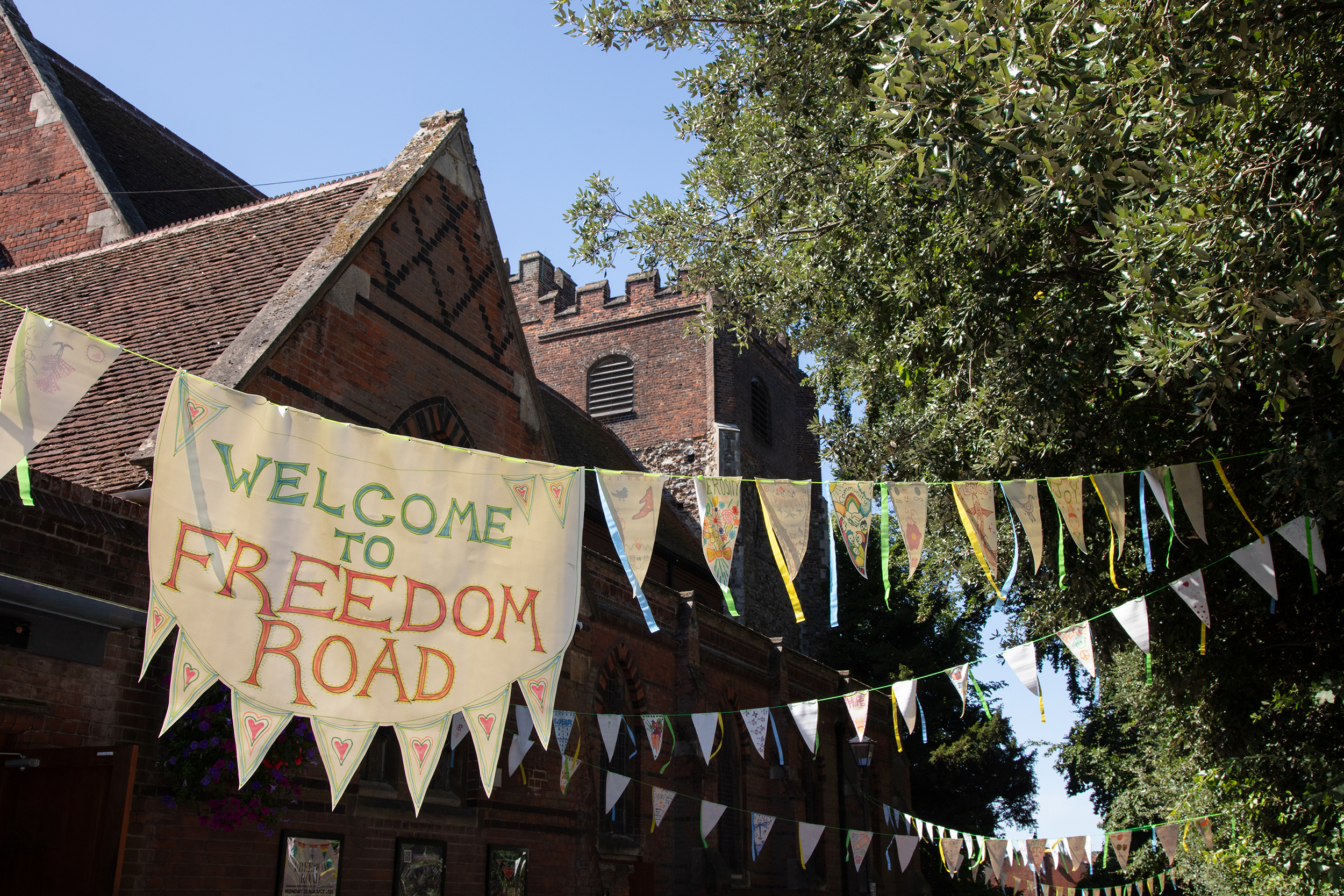
Bunting strung outdoors, with a large panel reading 'Freedom Road'
12.01.2026

Exhibition bringing 60 UK communities’ take on freedom to London’s Southbank Centre

A major photography exhibition marking the culmination of the national Our Freedom: Then and Now programme, marking 80 years since the end of the Second World War, will open at the Southbank Centre on Wednesday 25 March 2026. The exhibition brings together images from 60 locally led projects spanning towns, cities and rural communities across … Continued
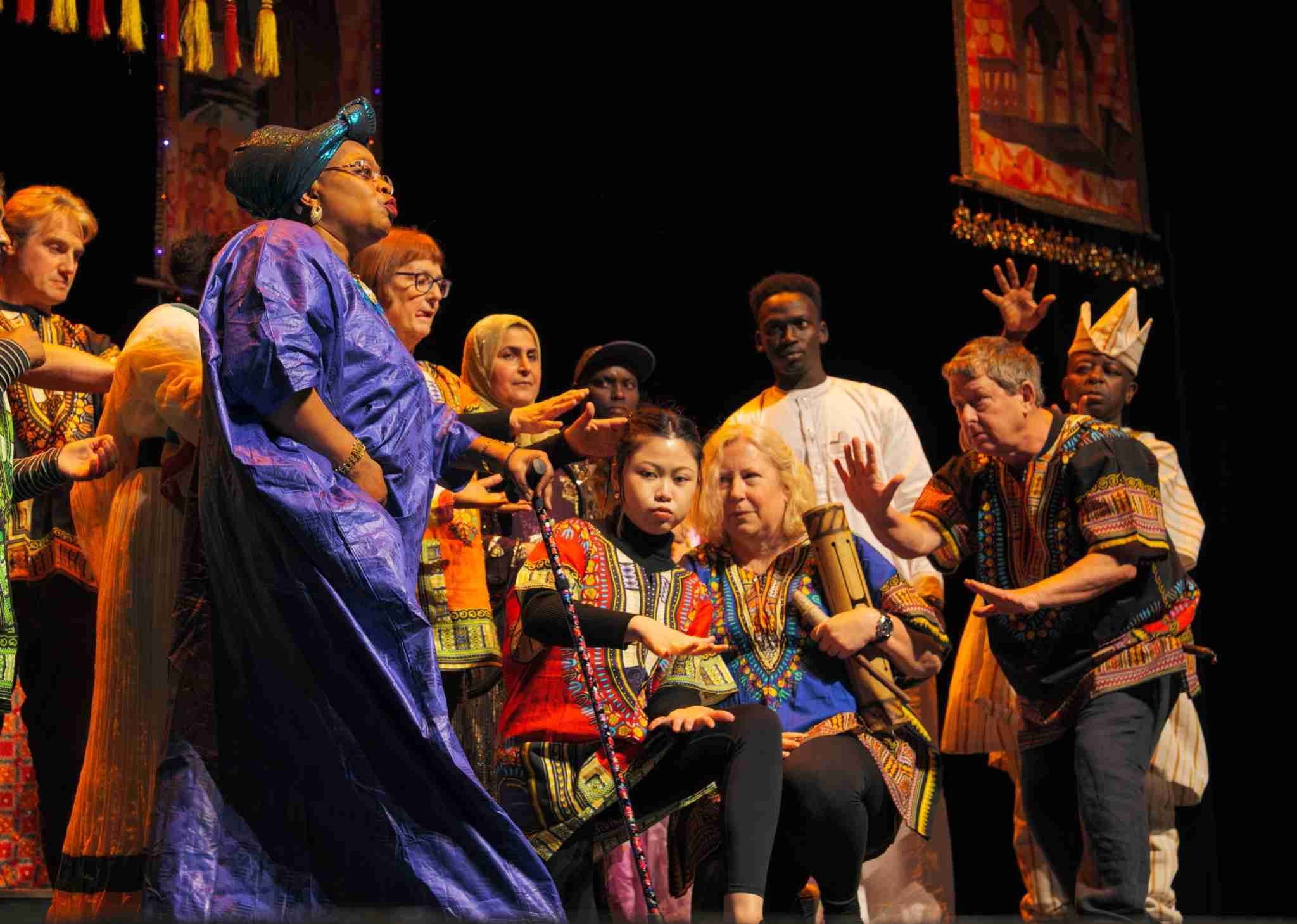
Performers on stage during Lawrence Batley Theatre's Our Freedom performance
07.11.2025

Our Freedom: Celebrating Community, Creativity, and the Meaning of Freedom

As the UK commemorates 80 years since the end of the Second World War, communities across the country are reflecting on what freedom means today. Our Freedom: Then and Now, the nationwide creative programme led by Future Arts Centres, is bringing together 60 arts centres and libraries to explore freedom through art, performance, and storytelling. … Continued

Person (face out of shot) holding a camera
22.08.2025

New nationwide exhibition to mark culmination of Our Freedom: Then and Now

We are delighted to announce Our Freedom: Then and Now will culminate in a national photography exhibition launching in early 2026 and inviting audiences to see their own freedoms reflected in others. Delivered in partnership with Open Eye Gallery, the exhibition will spotlight the powerful stories emerging from the Our Freedom programme, captured through the … Continued

Stephanie Peacock MP, Gavin Barlow from FAC, and staff and participants at The Old Fire Station, Oxford pose for a photo
15.08.2025

Minister Stephanie Peacock visits Our Freedom: Then and Now projects in Barnsley and Oxford

Future Arts Centres was delighted to welcome Stephanie Peacock MP, Minister for Sport, Media, Civil Society and Youth to two member venues this week as part of a visit to see the impact of Our Freedom: Then and Now. The Minister visited Barnsley Civic and The Old Fire Station in Oxford, both active contributors to … Continued

Two people on stage, one seated, and one stood at a metal lectern, presenting to an audience (out of shot). Behind them is a large projection screen, with two photos showing activity at arts centres; the Future Arts Centres logo; and the Milk & Honey logo
26.07.2025

Our Freedom: Then and Now Partners with Leading Voices in Libraries, Arts, and Media

We’re pleased to officially introduce three fantastic organisations who are partnering with Future Arts Centres to help bring powerful community stories to life across the UK as part of the Our Freedom: Then and Now programme: Libraries Connected, Open Eye Gallery in Liverpool as part of the Socially Engaged Photography Network (SEPN), and Milk & Honey PR. … Continued