Threads of Freedom is a Leeds Libraries project created as part of the national initiative Our Freedom: Then and Now, delivered by Future Arts Centres and supported by the UK Government through Arts Council England. The programme invited people across Leeds to explore one powerful question: What does freedom mean to us today, 80 years after the end of the Second World War?
Over several months in the summer of 2025, hundreds of people took part in a rich programme of free textile workshops, classes, and creative activities held in libraries and community spaces across the city. Thousands more engaged with the project through events, displays and conversations.
Stitching Together Leeds’ Stories
Working with lead artist Hayley Mills-Styles and textile artist Elnaz Yazdani, community groups were invited to explore ideas of freedom through embroidery, patchwork, darning, embellishment and storytelling. Participants drew inspiration from Leeds’ history, library collections, and a specially commissioned poem by Poet Laureate Simon Armitage, Freedom Road.
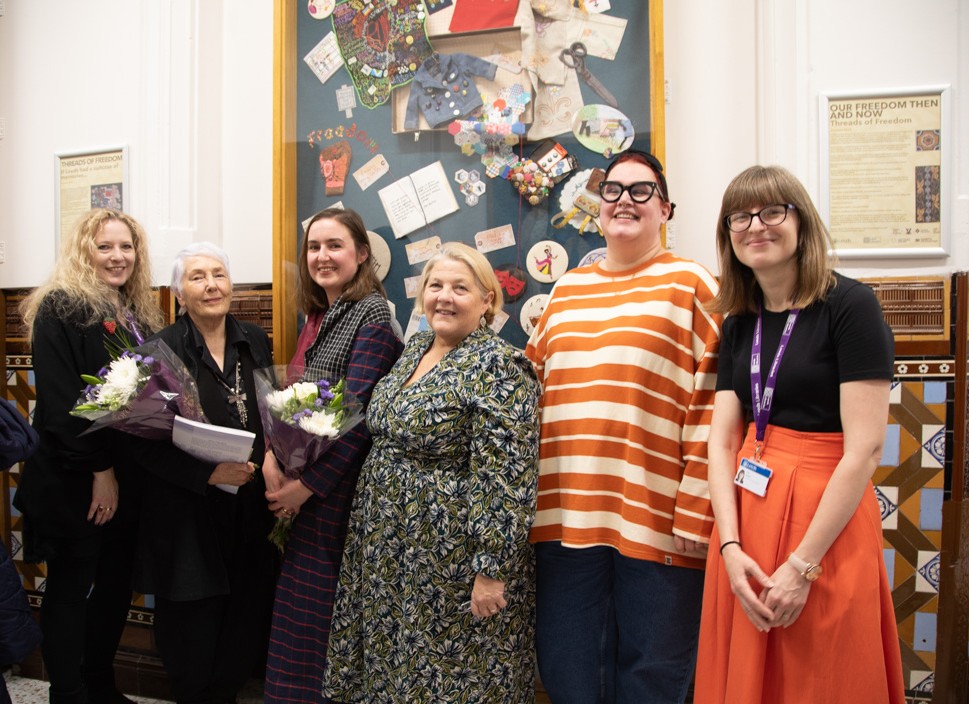
The resulting collaborative artwork brings together dozens of personal textile pieces – each one reflecting memories, identity, place, and what freedom means to the maker. These works have been curated into a single panel now installed alongside the iconic Leeds Tapestry in the first-floor corridor of Leeds Central Library. In addition, a diverse digital patchwork display includes every single stitch contributed!
“I chose as my subject The Chemic Tavern, in Woodhouse, a place where you could be yourself and have the freedom to express your true identity. I took inspiration from Simon Armitage’s poem Freedom Road: “Come as you are… do as you wish, sing us your dreams”. I was honoured that my piece was chosen for the final artwork and is now on permanent display for all to see and enjoy. It’s an experience I will treasure for the rest of my life.” – Mark, workshop participant
A City-Wide Creative Effort
Threads of Freedom brought together an incredible network of community groups, including Women Peacing Together, Leeds Art Gallery, the Peer Support group, Stitch Up, RVS, and Women’s Health Matters. Their collective effort shows how creativity can connect people in meaningful, sustaining ways.
“The enormity of the subject ‘freedom’ meant that our discussions were far reaching and letting our imaginations run free. Imagery suggested ranged from saris draped from ceilings, the unravelling of many reels of yarn spread out over the floor to elaborately sequinned boxes of hidden delights and other wild ideas.” – Hilary, member of Women Peacing Together
During the programme a new library initiative was launched to provide free reusable period products, delivered in partnership with Freedom4Girls – a lasting legacy that highlights the project’s focus on rights, dignity and wellbeing.
Supported by Future Arts Centres, the Leeds programme was able to employ ten artists, strengthening the city’s creative ecosystem and supporting local practitioners.
Celebration and Legacy
A celebration event marked the unveiling of the final artwork, with music, food, zine making, and crafts. The guest of honour was Kate Peace (formerly Russell), creator of the original Leeds Tapestry.
“It’s really wonderful to see that the level of interest in the Leeds Tapestry is alive and well after three decades, and that there is a very welcome renewal of participation in the textile arts in the city.” – Kate Peace
A Lasting Contribution to Leeds
Threads of Freedom is more than a textile panel – it’s a testament to the voices, experiences and hopes of people across Leeds.
Together, participants turned ideas into stitches and stitches into something truly special: a collaborative artwork celebrating freedom, connection, and community storytelling.
The finished piece is now on permanent display during library opening hours, and visitors can also join regular Tapestry Tours, bookable through TicketSource.
“As lead artist, working closely with Leeds Libraries was a particularly valuable aspect of the project. Together, we shaped an approach that combined storytelling, local history, and personal narratives to create a strong and engaging outcome. Being involved in the development of the project from its early stages allowed me to grow creatively, refine my facilitation skills, and think more deeply about how textile work can exist within public and cultural spaces. Knowing that the finished tapestry will be enjoyed by thousands of visitors each year is a bonus.” – Hayley Mills-Styles, Lead Artist
View more on the venue's website