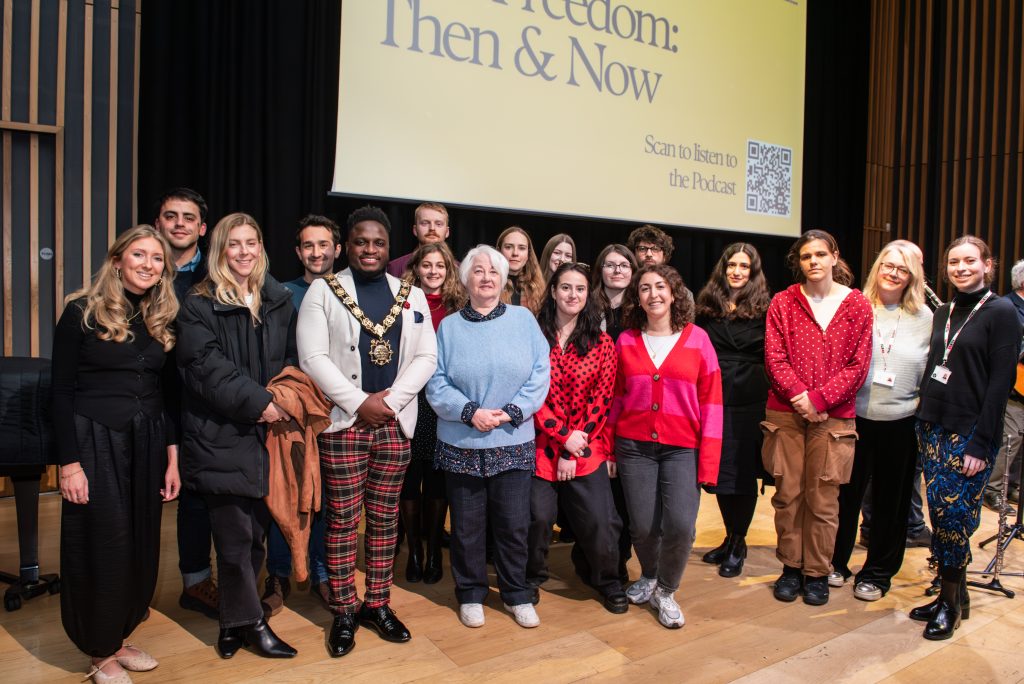
Our Freedom: Then and Now was a creative, intergenerational project exploring what freedom means eighty years after the liberation of Europe. Delivered at JW3 as part of a national initiative led by Future Arts Centres, the project brought together 20 young Jewish adults aged approximately 20–35 to reflect on inherited memory, identity, and responsibility through creative practice and collaborative storytelling. For many, the experience became deeply personal, with one participant describing it as “the most meaningful thing I have done in a long time,” marking the beginning of “exploring this journey through art.”
Although not all participants had a direct family connection to the Holocaust, the project brought together members of the Jewish community to explore how its legacy continues to shape identity and collective memory generations later. Several participants spoke about how the process opened up conversations that had long felt out of reach. One reflected that the project “made me question and rethink different aspects of history, but also my family history and my personal history… There’s less silence around my grandparents’ people, just breaking the silence around my own family history.”
Over several months, participants took part in a structured programme of workshops facilitated by artist Adam Kammerling, working alongside historians and Holocaust Learning specialists. Through guided discussions, archival exploration, object-based storytelling, and creative exercises, participants engaged with complex historical material while developing their own creative responses. For some, this work built on earlier encounters with Holocaust testimony; as one participant shared, “I got to know this survivor’s story through doing my dissertation at university. I have a feeling it will go on to shape different things that I do throughout my life… and give me the courage to get involved in community work or commemoration in a different type of way.”
Through the creative process, participants explored not only what had been inherited from previous generations, but also the responsibilities of becoming memory holders themselves. Listening to one another’s stories allowed participants to recognise both the diversity of individual experiences and their place within a wider shared heritage. The collaborative structure of the workshops supported participants in developing confidence to engage with sensitive history, articulate personal responses, and contribute to contemporary conversations around Holocaust remembrance within the Jewish community. As one participant put it after the exhibition opening, “it has been a wonderful experience.”
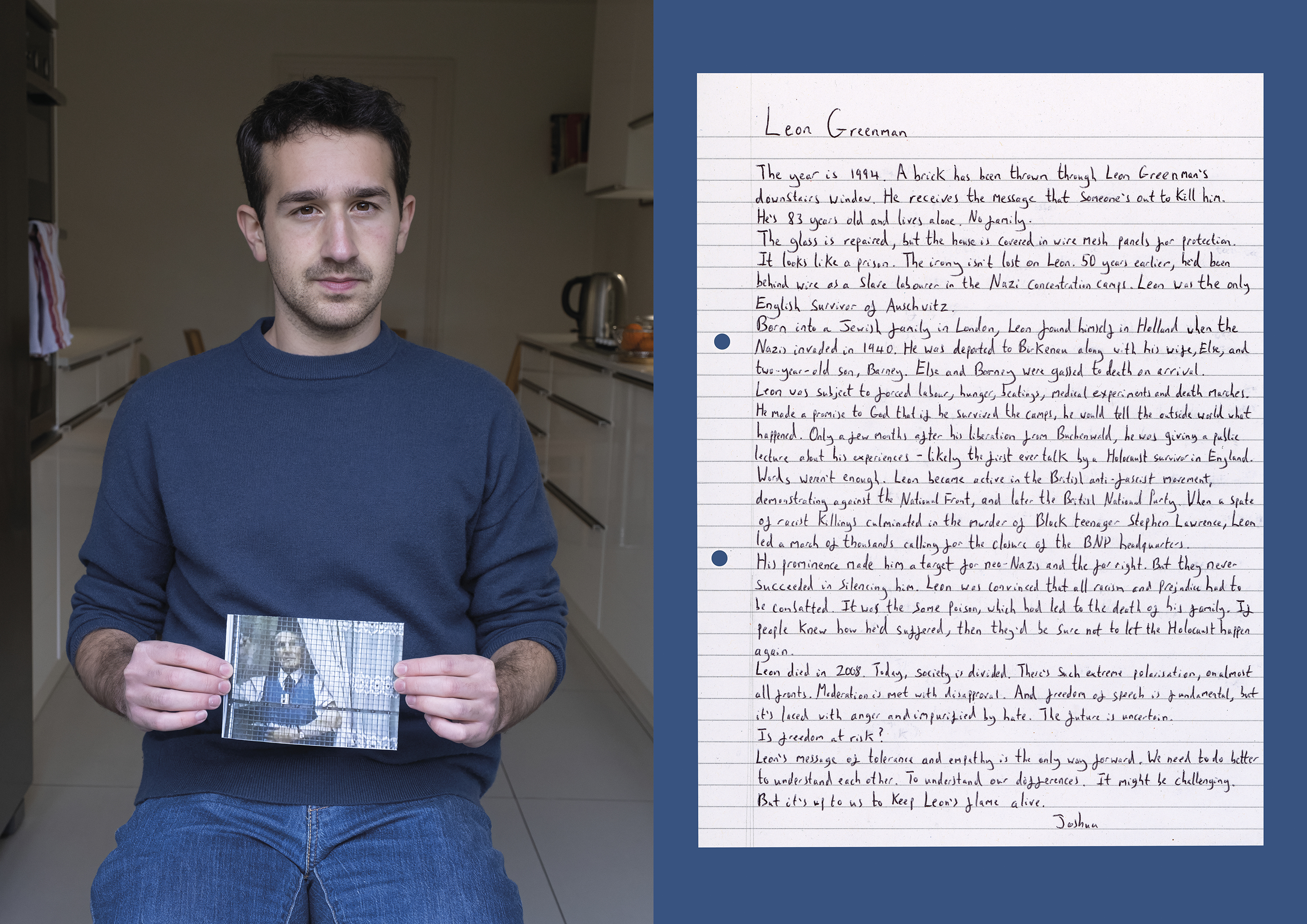
The central outcome of the project was a public exhibition at JW3, showcasing a series of personal “memory pieces” created by participants. These works took a wide range of forms, including installations, photography, written reflections, and filmed storytelling. Many were inspired by family objects, inherited stories, or silences within family histories. The exhibition invited audiences to encounter individual journeys of discovery while reflecting on how memory is passed down and reshaped across generations.
Alongside the exhibition, the project produced a podcast series capturing the reflections and questions of a generation born many decades after the Holocaust. Through conversation, personal reflection, and historical context, the podcast explored themes including liberation, silence, rebuilding, belonging, and responsibility. The series extended the reach of the project beyond the exhibition space and demonstrated the continued relevance of Holocaust memory to contemporary Jewish identity and community life.
Our Freedom: Then and Now created a supportive and collaborative environment for exploring Holocaust legacy through creative practice and community dialogue, encouraging participants and audiences alike to consider freedom as an ongoing responsibility carried forward through storytelling, creativity, and shared reflection.
View more on the venue's website