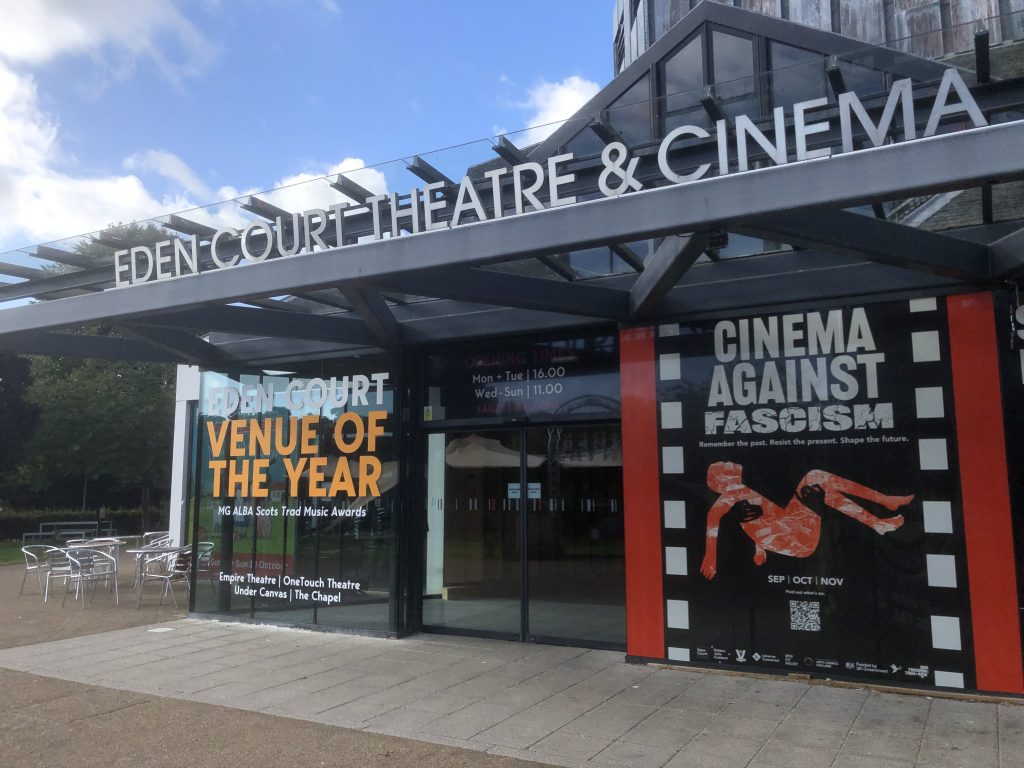
Cinema Against Fascism was a three‑month season of films and community‑led events presented primarily at Eden Court, Scotland’s largest multi‑arts venue, running from September to November 2025. The project explored what freedom means in an age of rising authoritarianism, celebrating resistance movements and communities around the world that continue to fight for justice, equality and solidarity 80 years after the end of World War II.
Reflecting on the season, Paul MacDonald‑Taylor, Head of Film at Eden Court, said:
“This season lands at a time when the far right is on the rise throughout Europe and the US, powered by social media and outspoken minority views which have disproportionately loud platforms. With Cinema Against Fascism we are exploring the rise of fascism from its roots before World War 2 to the present day, and the ways in which freedom has been taken. We will also celebrate the people around the world who are fighting to have their voices heard.”
What Happened
Eden Court curated a cinema season featuring landmark films and urgent contemporary documentaries examining themes of resistance, justice, migration, identity and solidarity across the decades since 1945. Screenings ranged from Mark Cousins’ latest essay film The March on Rome, exploring fascism’s rise in Italy, to Jonathan Glazer’s Oscar‑winning The Zone of Interest, presenting a challenging look at life at Auschwitz for a German Commandant. Other highlights included Bob Fosse’s Cabaret, set against 1930s Berlin; Mr Nobody Against Putin, an investigation into democracy as a teacher goes undercover to film the militarisation of his pupils; and Nae Pasaran, the remarkable true story of Scottish workers standing in solidarity with Chile under Pinochet, which featured a sold‑out Q&A with director Felipe Bustos Sierra.
Several other screenings were accompanied by special introductions and guest speakers, including a German Filmklub event for The Marriage of Maria Braun. These events created space for meaningful conversations about the challenges of freedom – past and present.
A central element of the project was the commissioning of Highland poet Caroline Burrows to create an original poem responding to the question “What does freedom mean to you?” Working across Highland communities, Caroline engaged residents in exploring how fundamental freedoms are upheld, challenged or reshaped today. The resulting poem, Freedom From Fascism, drew on the 1948 Universal Declaration of Human Rights and explored five core freedoms: asylum, fear, want, speech and worship. It premiered as a live public reading on 30 November 2025, ahead of the final film in the season, The Lives of Others.
Who Eden Court Worked With
The project brought together diverse partners and participants across the Highlands. Eden Court collaborated with the German Filmklub for a special screening event, while the poetry commission engaged communities including participants from The Bike Shed, The Courthouse Museum, Fourways Club, Cromarty History Society, libraries, youth cafés, lunch clubs, knitting groups and creative academies. Contributors ranged from school children and young people to older residents, creatives and volunteers, representing multi‑faith communities and people of varied ages and backgrounds.
Caroline Burrows noted that engaging with communities revealed why the question “What does freedom mean to you?” feels increasingly urgent – and why answering it can carry the risk of being misunderstood.
Creative Outcomes
The commissioned poem Freedom From Fascism stands as the project’s core creative output, weaving together 80 voices and community stories from across the Highlands. Structured around the five freedoms of the Universal Declaration of Human Rights, the poem incorporates historical literary quotations from Scottish writers (Janet Hamilton, Robert Burns, John Barbour), international voices (Heinrich Heine, Abu’l‑Ala), and contemporary references. It explores concepts of freedom in lived Highland experiences – from asylum seekers and LGBTQ+ communities to disabled people accessing services, women’s pension rights, and the complexities of speaking out on contentious issues.
The poem includes direct quotes and testimonies from community participants, connecting 14th‑century Scottish poetry with 21st‑century anxieties about artificial intelligence, social media, sectarianism and genocide.
Project Impact
Cinema Against Fascism created space for communities to reflect on past freedoms, current threats and collective resistance. By pairing cinema with poetry and conversation, the project connected Highland voices with global discussions about what it means to live freely in an age of rising authoritarianism. The season attracted diverse audiences across three months of screenings and special events, while the poetry commission ensured that local stories and perspectives shaped the artistic response to these urgent, timeless questions.
View more on the venue's website