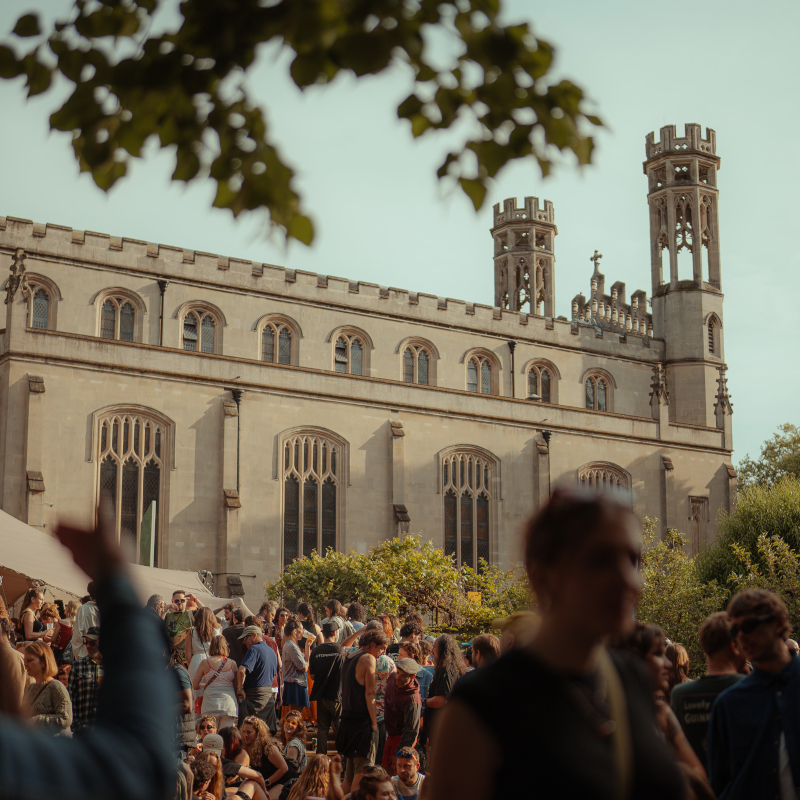
Freedom 25: Poetic Placards & Billboards was Trinity Community Arts’ contribution to the national Our Freedom: Then & Now programme led by Future Arts Centres. The project brought together 60 arts centres and libraries from across the UK to mark 80 years since VE/VJ Day and explore what freedom means today. At Trinity, creative writing provided the starting point. Working with Bristol’s City Poet, Sukina Noor, and Trinity’s Heritage Curator, Dr Edson Burton, we welcomed participants from local community groups and neighbourhoods to take part in a series of summer sessions. Caribbean Elders, Art for Wellbeing participants, refugee women and children, and members of Bristol Drugs Project all contributed their reflections on individual and collective ideas of freedom. These conversations uncovered personal memories, lived experiences, and hopes for the future, forming the foundation for a series of autumn printmaking workshops led by visual artist Sonja Burniston, and inspiring Sukina’s new poem Gold, written to reflect the voices of participants.
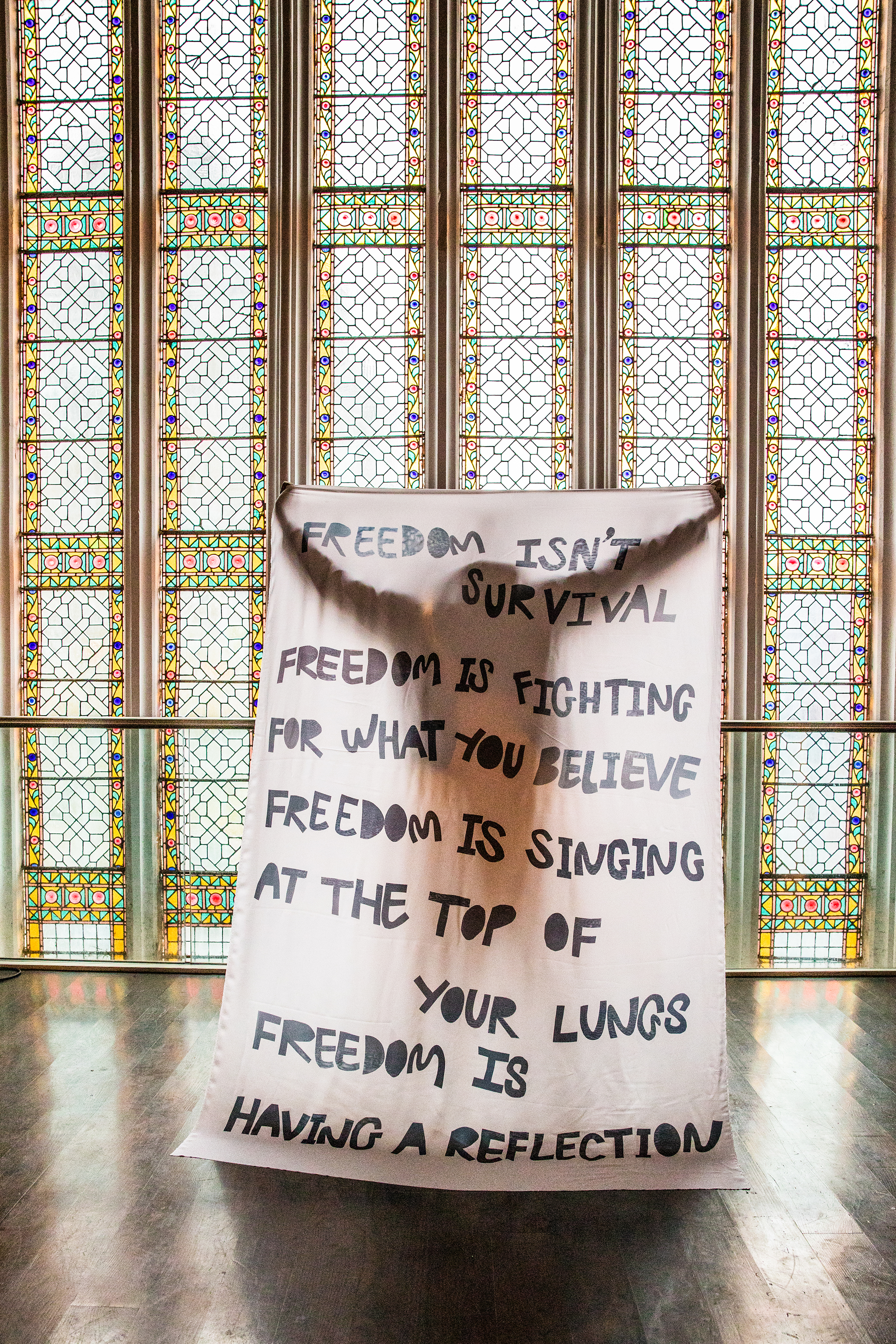
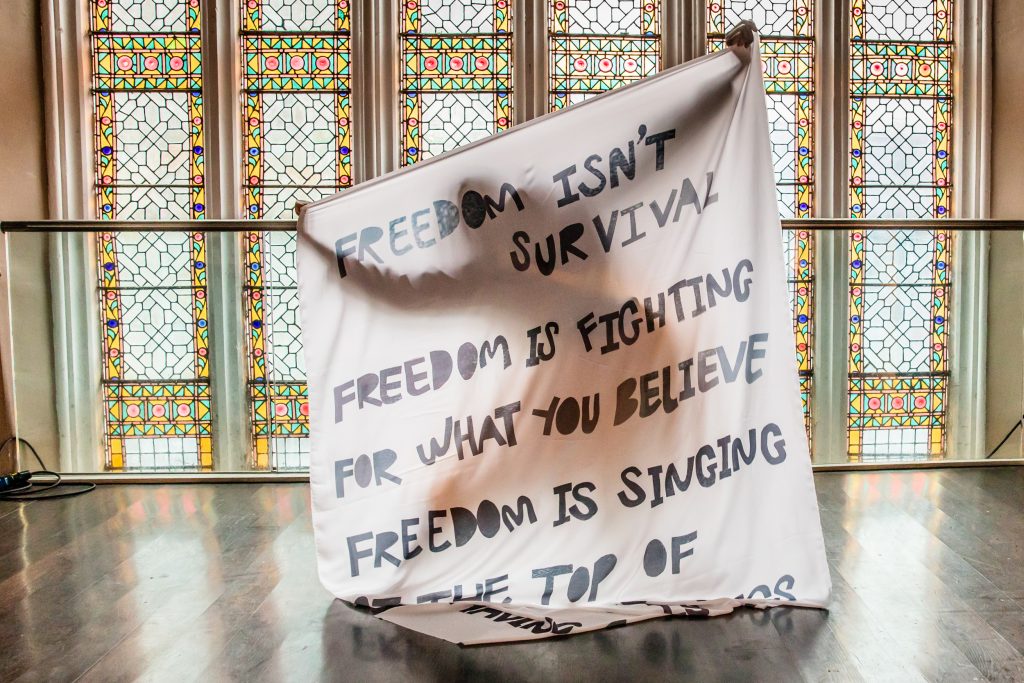
Sonja’s print workshops explored a range of techniques including lino cutting, heat press, botanical printmaking, and dry‑point. Participants interpreted the writing generated over the summer and continued to explore what freedom meant to them through visual expression. Alongside individual artworks, Sonja designed a large, printed fabric banner for the Gold text, supported by a communal lino‑carved design. This banner became a central feature in a movement‑based photoshoot led by project photographer Leticia Valverdes.
In November, Dovetail Orchestra led a celebratory gig at Trinity, sharing music from around the world. Dovetail is a local group that provides a welcoming space for refugees and asylum seekers to build connections through music, and the evening featured the first public sharing of Sukina’s Gold poem. Participants from the creative writing and printmaking sessions joined the orchestra and audience, bringing the strands of the project together in a shared moment of celebration.
The project culminated in an indoor print and poetry exhibition in Trinity’s Graffiti Room, and a large‑scale outdoor billboard installation created in partnership with Build Hollywood. Open to the whole city 24/7 from November until the end of 2025, the installation extended participants’ voices far beyond the walls of the building.
For many, the process of sharing and being heard was as significant as the final artworks. Veronica, a retired nurse who emigrated from Grenada in the 1960s and now attends Trinity’s Art for Wellbeing classes, reflected on her experience of the creative writing and print sessions: “I enjoyed every bit of it! Being able to express whatever I felt at the time. I felt comfortable talking about all the historic racism and discrimination, which was positive being heard by a diverse group and acknowledged.”
Artist Sonja Burniston echoed the importance of these shared spaces, saying: “I think this project is really exciting and so important right now. It’s happening in arts centres and libraries, places where people can come together to share and tell their stories. These gatherings help us feel connected and remind us that we’re not just shouting into the void or quietly holding onto our thoughts in a world that often seems a bit chaotic due to global politics. It’s comforting to realise there are others out there who share our beliefs and values. Without these spaces and moments to talk about what really matters, it can feel pretty lonely. I’ve found it really special to be with others who get it. We’re all allies in wanting freedom for each other, and it’s wonderful to advocate for that together!”
Watch this film by Jon Aitken:
View more on the venue's website