Barnsley Civic’s project explored the theme of Freedom from Want, a concept first coined by Franklin D. Roosevelt which emphasises the importance of ensuring that everyone has access to basic needs such as food, shelter and education. The project used this idea as a starting point to reflect on how communities can work together to build a society where everyone feels supported, valued and free to be themselves.
Barnsley has a long and proud tradition of mutual aid and collective action, and the project celebrated the ways local communities continue to come together to care for one another. Participants were encouraged to explore how communities respond to hardship by supporting each other and creating spaces where everyone can belong. Through conversations and creative activities, the project explored how community solidarity continues to shape life in Barnsley today.
A Shared History
The history of Barnsley Civic itself provided an important context for these conversations. The building was originally constructed in 1877 by Henry Harvey as the Barnsley Mechanics’ Institute and Public Hall, a space dedicated to learning, culture and civic participation. For generations it has been a place where people gather to exchange ideas and take part in cultural life.
Thanks to Barnsley Archives and Local Studies Centre, the project uncovered that during the Second World War the main hall housed a British Restaurant, providing affordable meals for local people during wartime rationing. Later, a soup kitchen offered relief during the miners’ strikes in the 1980s. This history highlights the building’s long‑standing role as a space where community support and shared resources come together. Today, Barnsley Civic continues this legacy by creating opportunities for people to connect through arts, culture and community projects.
Food and Community
Working with a wide range of local partners, the programme explored the relationship between food, community care and freedom from want. Organisations including Creative Recovery, Barnsley Food Bank, FareShare and Barnsley Good Food Pantries played an important role throughout the project.
These partnerships brought together organisations working across arts, community wellbeing, and food support, creating opportunities for people from different backgrounds and generations to come together.
The project connected stories of wartime rationing, growing‑your‑own initiatives and food sharing with contemporary responses to food insecurity. The work of the organisations involved highlights how communities continue to support one another to ensure that no one is left behind.
What Can You Bring to the Table?
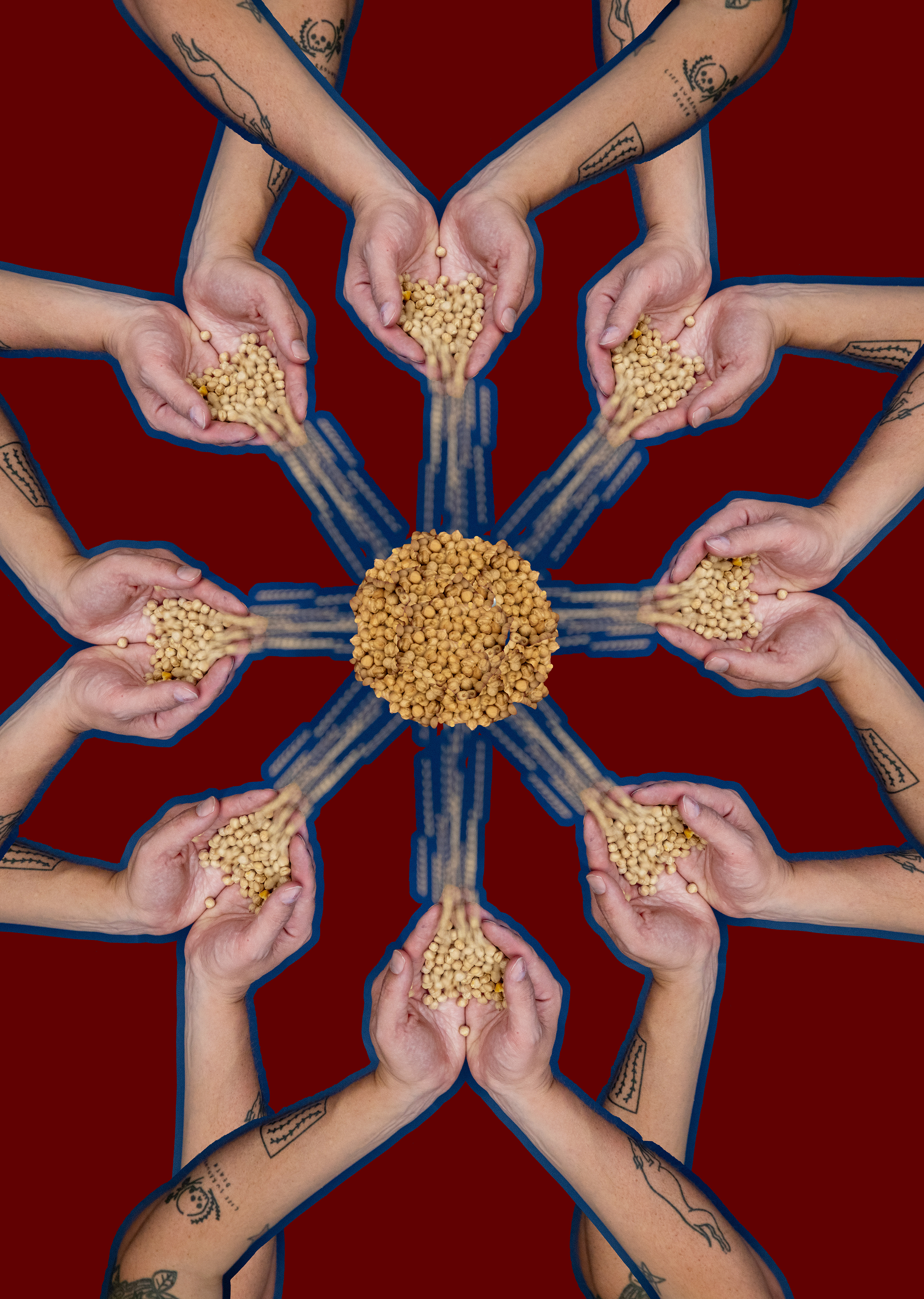
At the heart of the project was a creative prompt: “What can you bring to the table?”. This question encouraged participants to reflect not only on food but also on the skills, stories, values and acts of kindness that individuals contribute to their communities. It highlighted the idea that everyone has something valuable to offer, and that communities grow stronger when people are supported in sharing their voices and experiences.
A series of workshops and creative sessions brought people together to explore these ideas. Artist and printmaker CJ Reay of Black Lodge Press worked alongside artists from Creative Recovery to lead collage and creative workshops that encouraged conversation, storytelling and collaborative making. These sessions eventually led to the creation of a series of large textile banners inspired by the ideas and discussions that emerged throughout the workshops.
Participants also produced their own creative responses, including screen‑printed upcycled napkins, poetry and visual artworks. Members of Barnsley and District Art Society created visual responses to the poem Freedom Road by Simon Armitage, while young people from Barnsley Youth Council wrote an original poem reflecting on their perspectives on freedom, community and belonging.
“It made me feel so welcome and made me feel part of not just the Barnsley community, but the creative arts side as well.” (Project participant)
The Garden Gathering
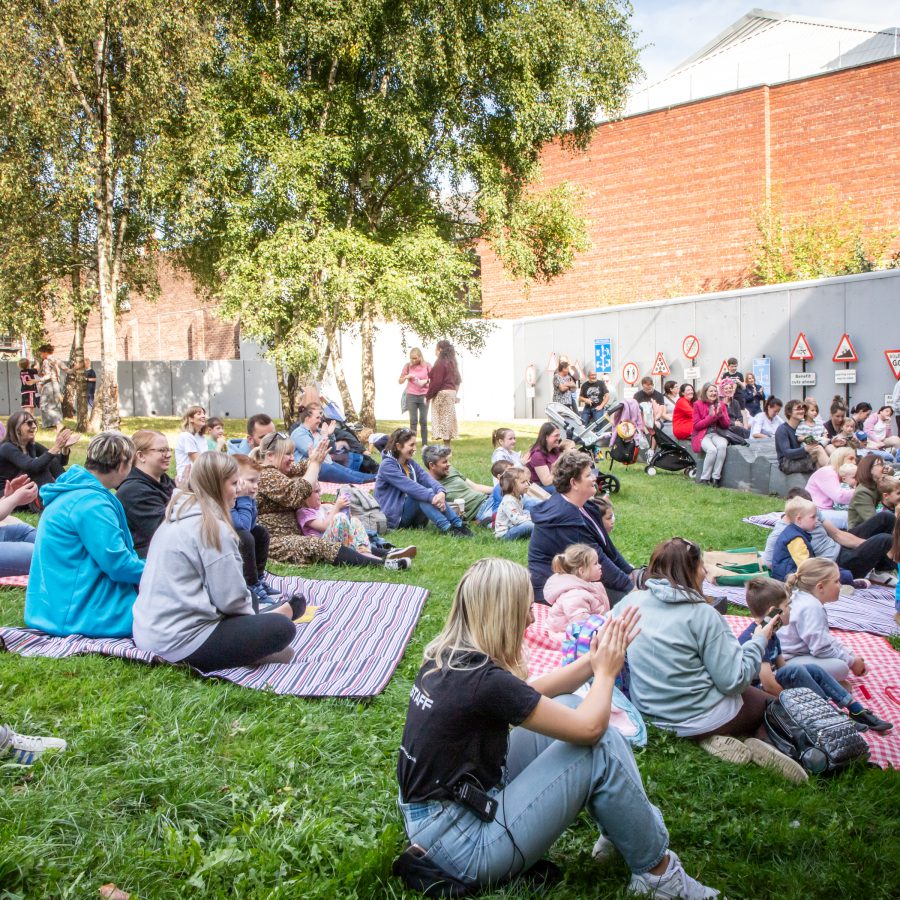
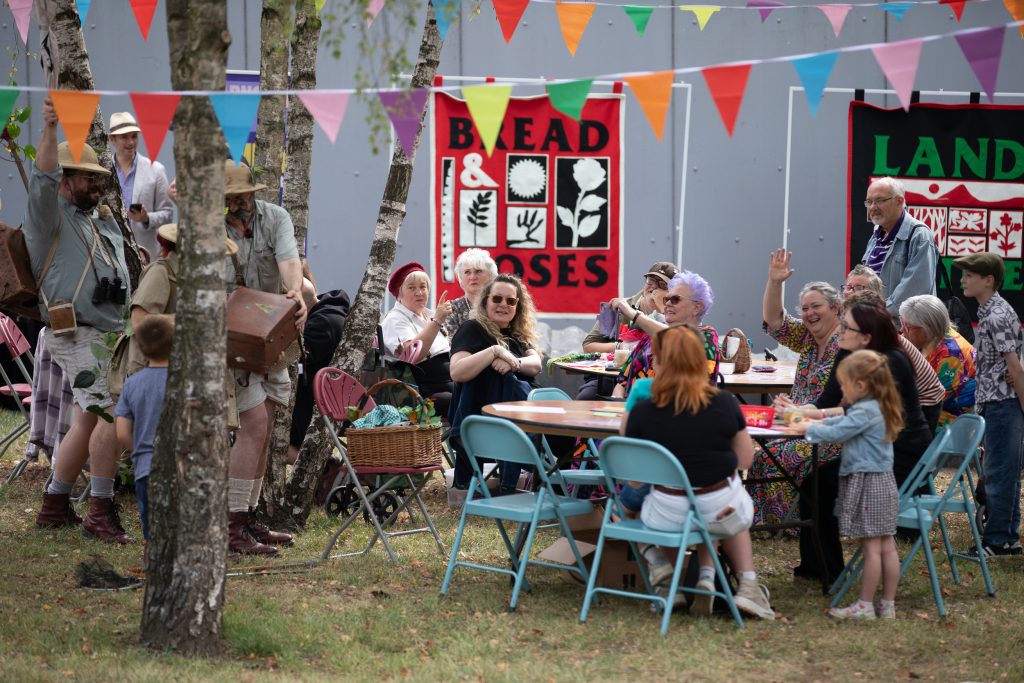
Inspired by the spirit of the project, participants chose to mark the event with a community street party-inspired gathering at Barnsley Civic’s Mandela Gardens. The event brought together participants, artists, partner organisations and local residents for an afternoon of food, music, conversation and creativity. It was joyful and wholesome, filled with chatter and laughter – a place for people from different communities and generations to meet, share experiences and celebrate the connections that had developed throughout the programme.
During the gathering, the collaborative textile banners were unveiled for the first time, reflecting the voices and ideas that had emerged through the workshops. A pop‑up exhibition also opened at Barnsley Civic, showcasing artworks created in response to Freedom Road by contributors from Creative Recovery, Barnsley Youth Council, Barnsley and District Art Society, and individual community participants.
Legacy
In collaboration with Barnsley Food Bank, Barnsley Civic is now also a designated Food Bank Collection Point, helping local people donate essential food items to support those in need.
The Garden Gathering created through the project will now continue as an annual event at Barnsley Civic, celebrating community togetherness, creativity and shared food while bringing local people and organisations together each year.
Through creative collaboration and by working closely with local community organisations, the project reinforced how community networks of support, care and solidarity remain vital. As Barnsley Civic approaches its 150th anniversary, the organisation reaffirms its commitment to placing community at the heart of its work and being a place where everyone has the opportunity to participate, contribute and thrive.
View more on the venue's website