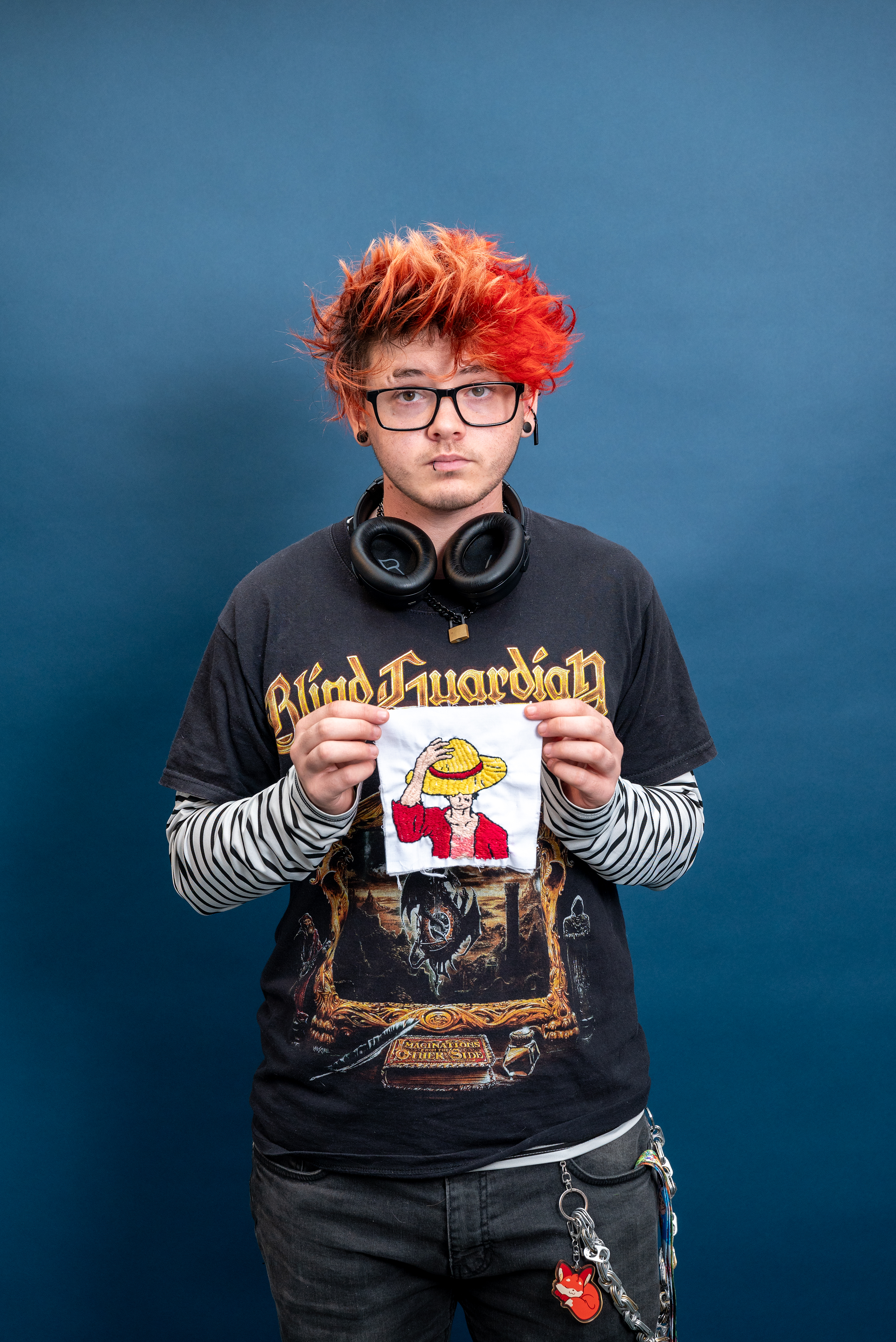
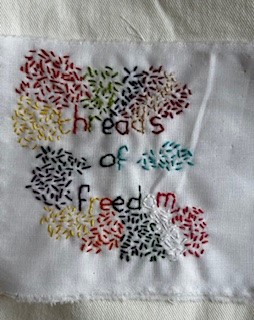
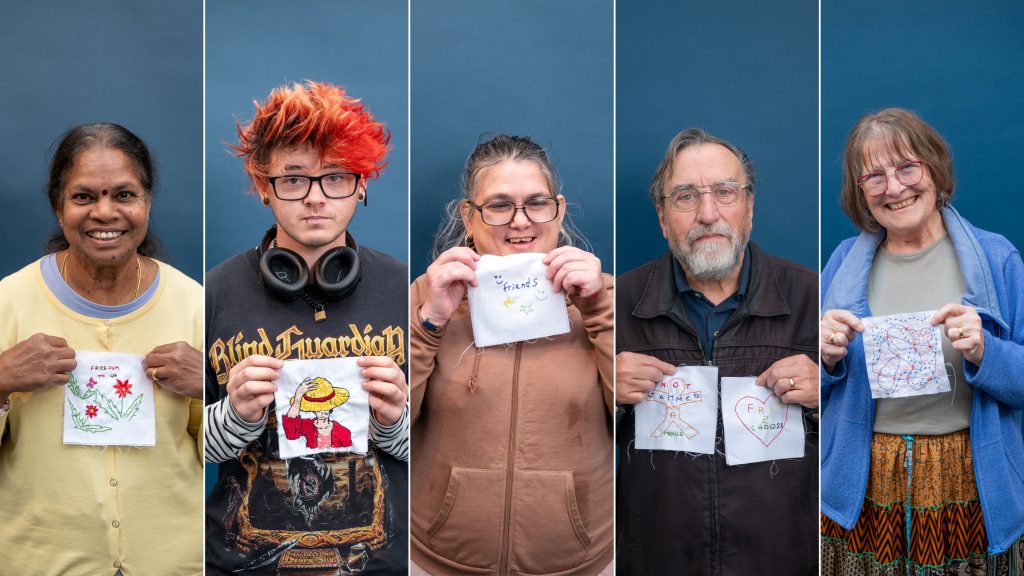
Threads of Freedom was an artist‑led community project shaped through shared making, listening and reflection. Designed and led by artist Helen Sill, with support from artist Tanya Wood, the project developed as a participatory response to place, history, and lived experience. Drawing inspiration from historical autograph cloths – textiles carrying names, messages and marks of presence – participants were invited to reflect on what freedom means to them today through stitch or drawing. As Helen reflected, the project revealed “how creativity can nurture community and reminded me that art can amplify voices while also inspiring the artist behind it.”
More than 200 people, aged 7 – 90, took part through workshops and drop‑in sessions across Havant Borough, held in local spaces including libraries with craft groups, in schools with young people, and in community centres with social prescribing groups. Shaped by the people who joined it, the project worked within a clear but flexible framework, offering simple prompts as starting points while allowing participants to choose how they wished to respond. Some contributions were made during shared sessions; others developed slowly at home. People stitched, drew, talked, paused, or simply spent time handling the materials. Drawings and written ideas could be submitted directly or translated into stitch with support. This balance between structure and openness allowed many forms of participation to exist at once – direct or indirect, solitary or shared – held together by an atmosphere of care, trust and agency, which enabled each contribution to enter the project on its own terms. As Tanya noted, “It has been a privilege to witness the strength of these communities and to create together.”
Participants’ contributions were attached directly to a series of dungarees, functioning simultaneously as garment and canvas. Every material and method of attachment was chosen with care, honouring the individuality of each contribution while ensuring the work could be securely and respectfully displayed. A running stitch was used throughout the installation to connect the pieces. As the project unfolded, the richness of drawn contributions became increasingly evident, leading to the development of a parallel body of layered drawings that sat alongside the textile installation and extended the conversation beyond the cloth.
The resulting body of work marks not only individual acts of expression, but also the freedoms gained – and still negotiated – over the past eight decades: freedoms of voice, choice and collective presence. It also grew through the collaboration between artists and community, and through the personal discoveries made along the way. One participant shared, “I came to the project simply wishing to discover and support an organisation that I love, but I found a new way of thinking about myself.”
An evolving exhibition documented the project’s process and development over three months, providing both a reflective space and a backdrop for further drop‑in stitching sessions. The final artwork was then exhibited in The Spring’s foyer throughout January, with the dungarees placed across the space and the drawings hung alongside them. A celebration event brought many participants back together, and the work was joyfully received by the whole community.
View more on the venue's website